Table of contents
- Branding vs Marketing: What's the Difference
- What Is Branding?
- What Is Marketing?
- Branding vs Marketing: The Full Comparison
- Why Branding Must Come First
- Minimum Viable Branding
- Real Brands That Got This Right
- Should You Invest in Branding or Marketing First? A 3-Question Framework
- What to Prioritize by Business Stage
- The 80/20 Budgeting Rule
- Frequently Asked Questions
- Final Takeaway
Branding vs Marketing: What's the Difference and What Should You Invest In First?
Quick Answer
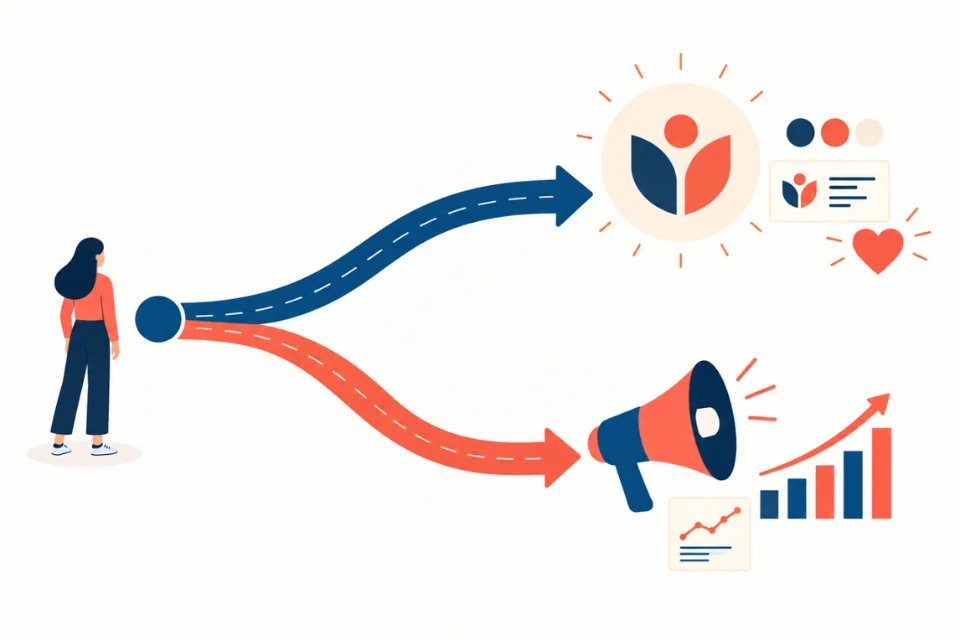
Branding is who you are. Marketing is how you tell people.
Branding builds your identity, positioning, and emotional connection with customers – it’s long-term and stays consistent for years. Marketing promotes that identity through campaigns, ads, and content to drive awareness and sales — it’s short-term and changes constantly.
The rule: Invest in branding first, even minimally. Without it, marketing has nothing solid to amplify — you end up paying to attract people who don’t understand or trust what you’re selling.
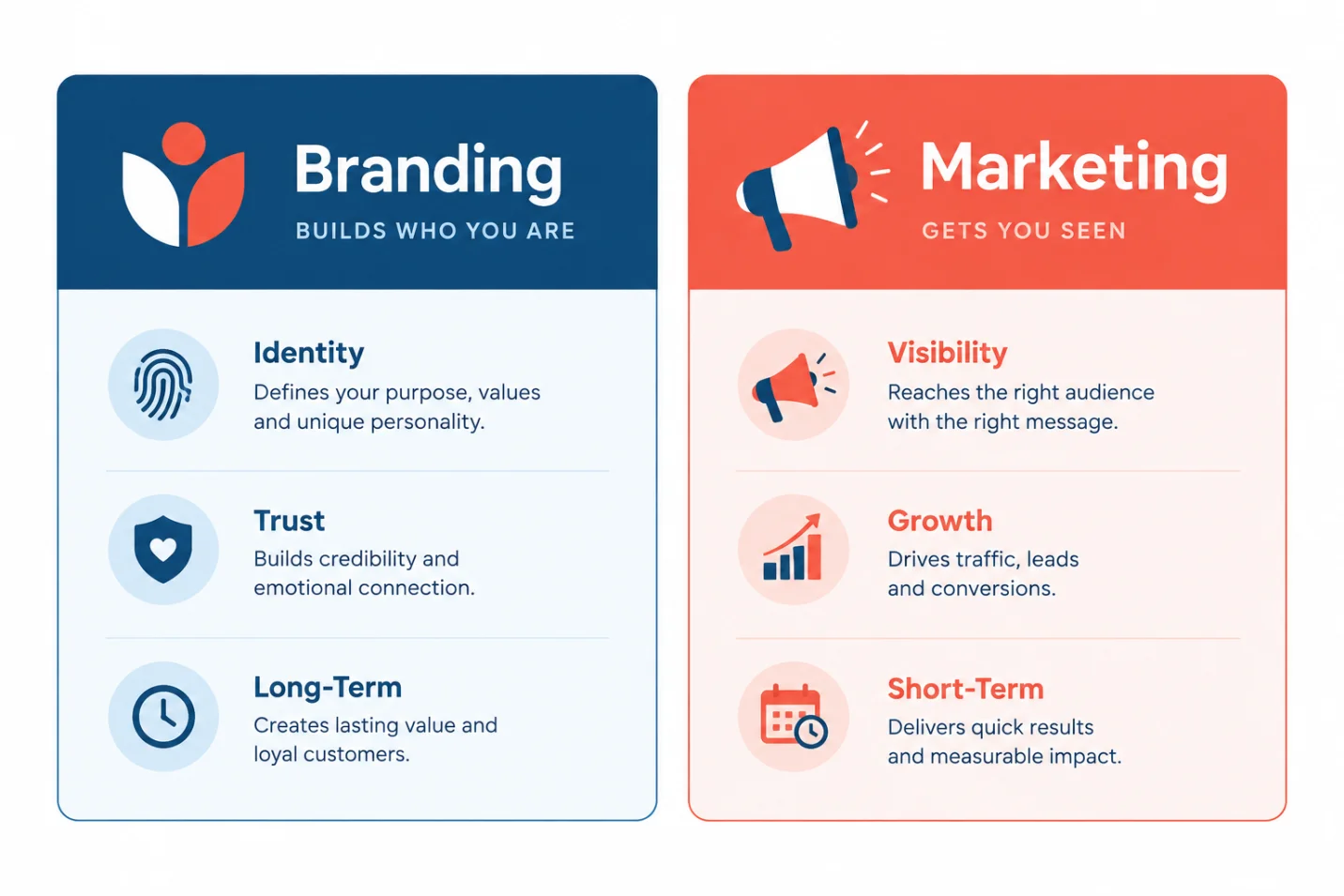
| Branding | Marketing | |
| Purpose | Build identity, trust, loyalty | Drive awareness, leads, sales |
| Time horizon | Long-term (years) | Short-term (campaigns, quarters) |
| Consistency | Stable, evolves slowly | Fluid, adapts to trends |
| Typical budget share | 10–20% | 80–90% |
| Outcome | Recognition, pricing power | Leads, measurable ROI |
If you only read this table, you already have the answer. Everything below explains why — and how to know exactly where your business stands right now.
What Is Branding? (And Why It's More Than a Logo)
Branding is the strategic identity of your business — what you stand for, who you serve, and why you’re different. It’s not your logo. It’s the reason someone chooses you over a competitor even when you’re not the cheapest option.
A logo is one output of branding. Branding itself is the decision-making layer underneath it.
Branding is made up of five things:
- Mission, vision, and values — why your business exists beyond making money
- Positioning — who you’re for, what problem you solve, why you’re different
- Visual identity — logo, colors, typography, imagery style
- Verbal identity / brand voice — tone, tagline, messaging
- Experience principles — how the brand shows up in your product, service, and hiring
Branding is slow by design. It builds trust and lets you charge premium prices over time, not overnight. Every one of these five elements is a service we build out individually at Brandlogg — see our full brand strategy & planning process if you want the detailed breakdown.
What is Marketing? (Tactics That Drive Sales)
Marketing is the execution layer — the tactics you use to promote your brand and generate leads, traffic, and revenue.
Common marketing channels:
- Digital — SEO, content marketing, social media marketing, email, paid ads, influencer partnerships
- Traditional — TV, radio, print, out-of-home (advertising services)
- Performance — retargeting, lifecycle emails, affiliate programs, conversion optimization
Marketing is measured in numbers: click-through rate, cost per click, cost per acquisition, and return on ad spend. It moves fast and changes with the platform, the algorithm, and the season.
Here’s the catch: marketing can only amplify what already exists. If your brand identity is unclear, marketing just makes the confusion louder — and more expensive.
Branding vs Marketing: The Full Comparison
| Dimension | Branding | Marketing |
| Purpose | Build identity, trust, loyalty | Drive awareness, leads, sales |
| Time horizon | Long-term (years) | Short-to-medium term (quarters, campaigns) |
| Consistency | Stable core, evolves slowly | Fluid, adapts to channels and trends |
| Focus | Internal culture + external perception | External promotion + conversion |
| Metrics | Awareness, sentiment, NPS, brand equity | CTR, CPC, CPA, ROAS, traffic |
| Budget allocation | 10–20% of total spend (typical) | 80–90% of total spend |
| Outcome | Recognition, preference, pricing power | Leads, sales, measurable ROI |
A business with strong branding but weak marketing is invisible — nobody finds it. A business with strong marketing but weak branding is worse: it attracts people, then confuses or disappoints them. Both problems cost you money. Only one of them is cheap to fix early.
Why Branding Must Come First
You can’t market something you haven’t defined. Here’s what happens when businesses skip branding and jump straight to ads and campaigns:
- Inconsistent messaging across every campaign, which confuses potential customers
- Rising customer acquisition cost over time, because there’s no brand preference — just price competition
- Lower conversion rates, because traffic that lands on your site doesn’t recognize or trust you yet
- Longer sales cycles, because buyers aren’t pre-sold on your value before a rep even talks to them
None of these show up in week one. They show up months in — as rising ad costs and flattening returns. By then, it’s a much more expensive problem to fix than it would have been at the start.
This is the exact pattern we see when businesses come to us after months of running ads with disappointing returns — the ads weren’t broken. The brand behind them was undefined. Get a free brand & marketing audit
Minimum Viable Branding: What You Actually Need Before Spending on Ads
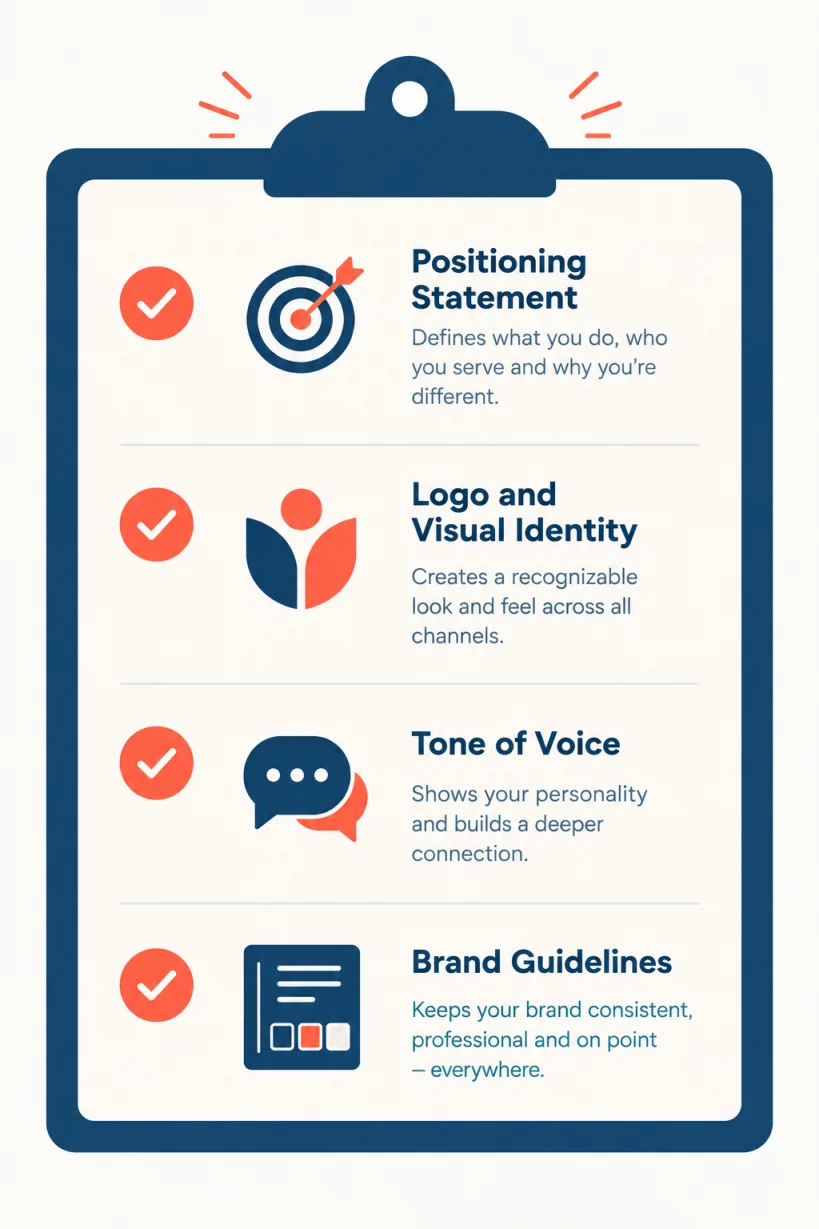
You don’t need a 60-page brand book on day one. You need four things, clearly defined, before you put a single dollar into promotion:
- A clear positioning statement — one sentence anyone can repeat back to explain what you do and for whom
- A professional logo and visual identity — colors, typography, and imagery that stay the same everywhere
- A defined tone of voice and messaging — how you sound, in writing and in person
- Basic brand guidelines — simple rules so anyone on your team represents the brand the same way
This is the floor, not the ceiling. But skip it, and every dollar you spend on marketing afterward works harder than it needs to — or doesn’t work at all.
If you’re a startup and want all four handled together in one package, this is exactly what Brandlogg Rise — our business kit built specifically for early-stage businesses — covers.
Real Brands That Got This Right
1. Fishwife (Tinned Fish)
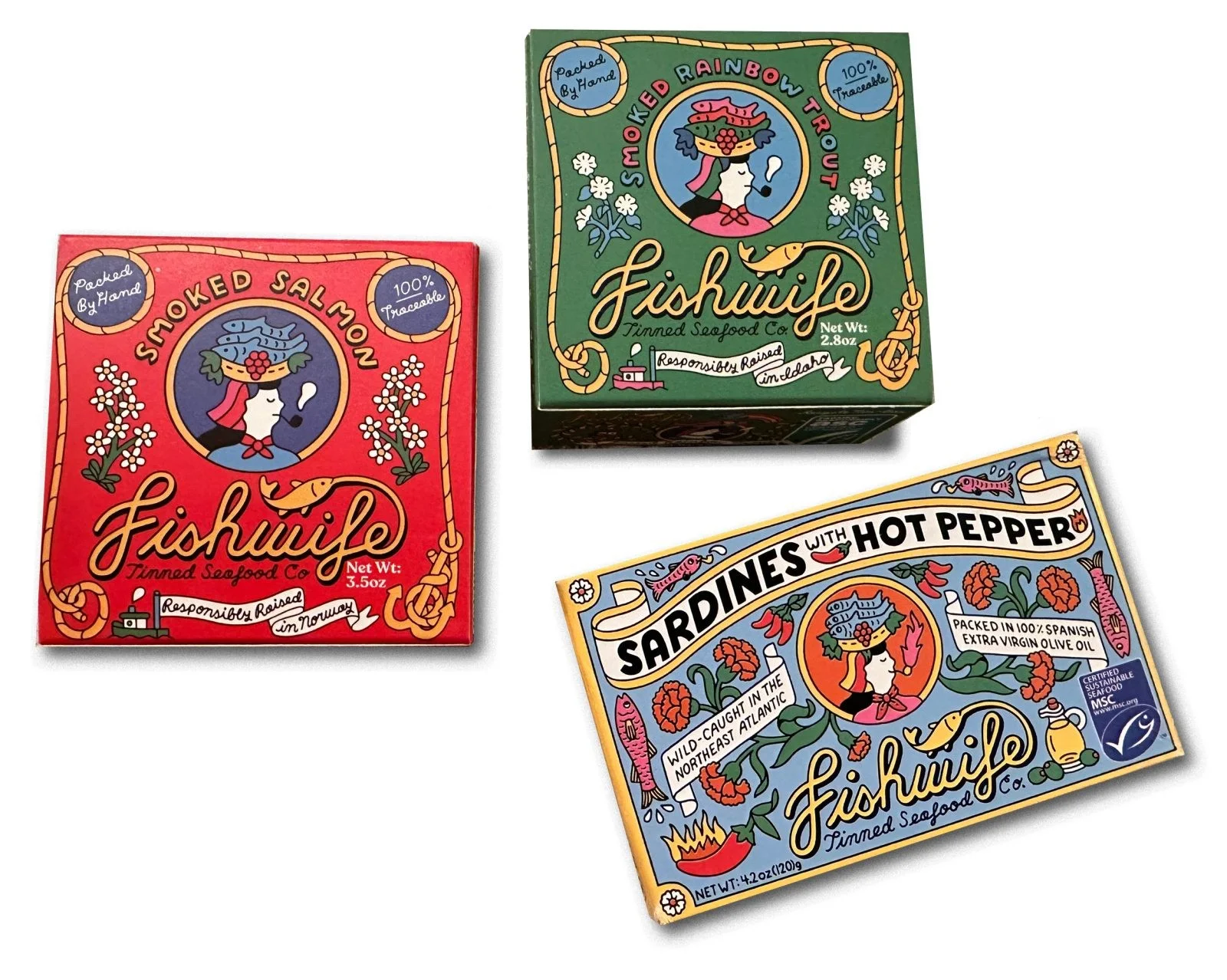
Branding: The brand used hand-drawn illustrations, vibrant colors, a distinctive character.
Marketing: Pop-up shops, organic social content, community-driven growth.
Result: The use of branding was quite unique that the marketing became nearly free – people posted about it on their social media channels because it looked irresistible and not because they were paid to.
2. Graza (Olive Oil)

Branding: The use branding to represent a friendly, fun personality and built a bright green squeeze bottle for olive oil.
Marketing: Seeding the product with food influencers.
Result: This results in that the bottle itself became a recognizable brand asset that showed up organically in cooking content without the need of any paid promotion.
3. Starface (Skincare)
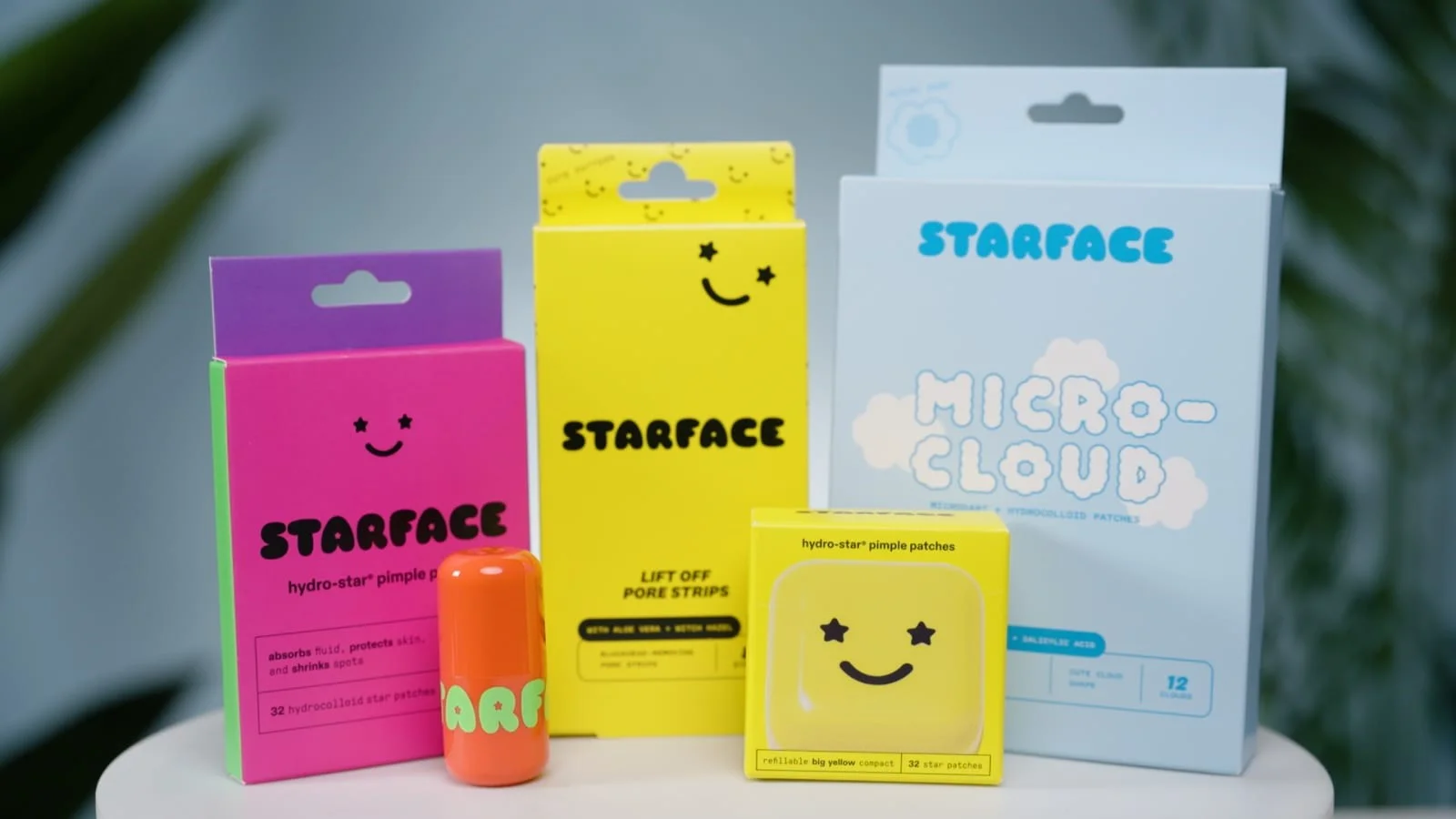
Branding: The bright yellow color and the star-shaped acne patches that destigmatized breakouts.
Marketing: User-generated content and real-world visibility – people wearing the patches in public.
Result: The use of branding & marketing results in customers became the marketing channel. The branding did the work marketing budgets usually have to buy.
The pattern across all three: distinctive branding made marketing cheaper, faster, and more organic. We’ve seen the same pattern in our own work — our rebrand of Lal Qilla Basmati Rice followed the same sequence: define the identity clearly first, then let marketing carry it. See more examples in our full project portfolio.
Should You Invest in Branding or Marketing First? A 3-Question Framework
Ask yourself these three questions honestly:
If no — invest in brand clarity first. No amount of traffic fixes an unclear message.
If no — invest in marketing and distribution. Your brand may be clear, but nobody’s finding it.
If no — you have a gap between branding and marketing. Fix the alignment before scaling either one.
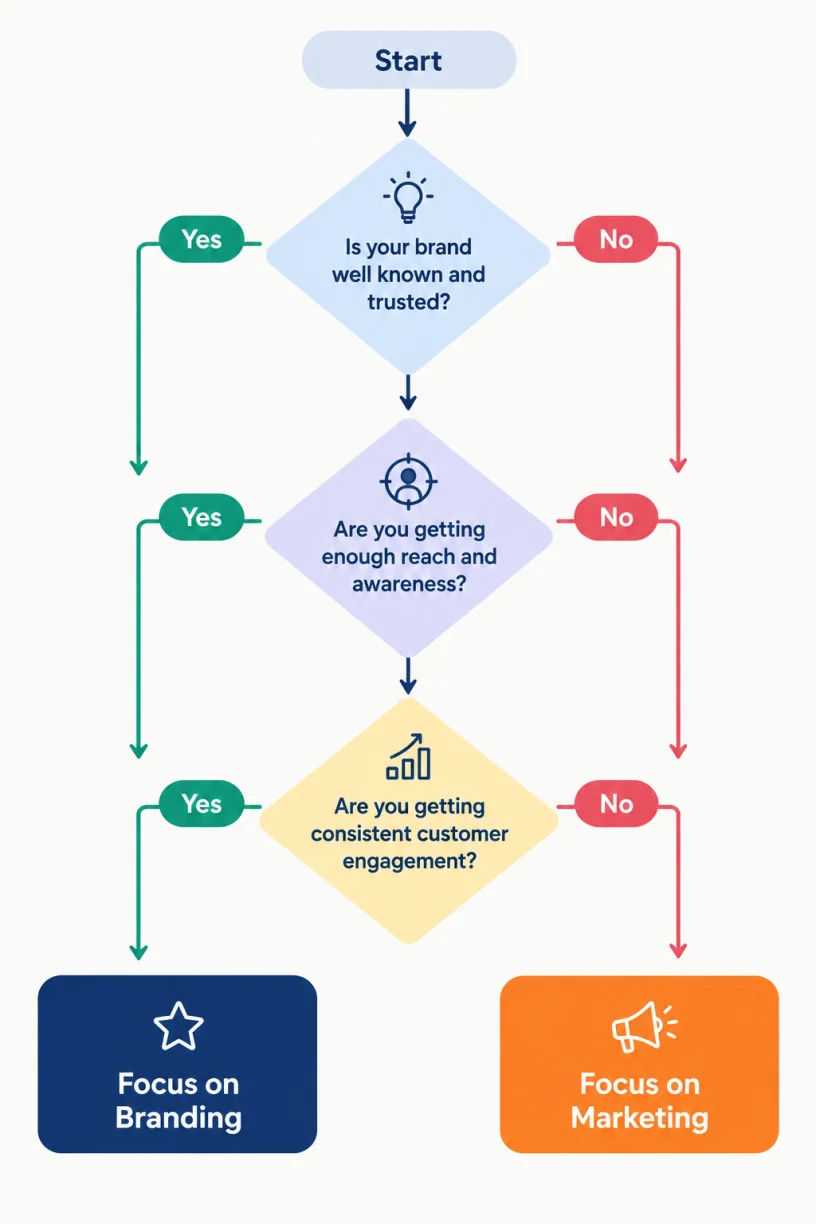
Most businesses that come to us for marketing help actually have a Question 1 problem, not a Question 2 problem.
Not sure which one applies to you? Book a free 30-minute brand audit — no obligation. Prefer to talk now? Message us on WhatsApp
What to Prioritize by Business Stage
| Stage | Priority | Why |
| Pre-launch / Startup | Branding first (minimum viable) | Avoids wasted ad spend on unclear messaging |
| Early growth | Balance both, protect the brand workstream | Prevents CAC creep as you scale spend |
| Scaling / established | Reinvest in branding if you hit a CAC ceiling or enter new markets | Differentiation matters more than distribution at this stage |
If your ad costs keep climbing and conversion rates keep falling despite the same offer — that’s usually not a marketing problem. It’s a branding problem showing up in marketing metrics. Talk to our team about a full digital marketing audit if this sounds like where you are.
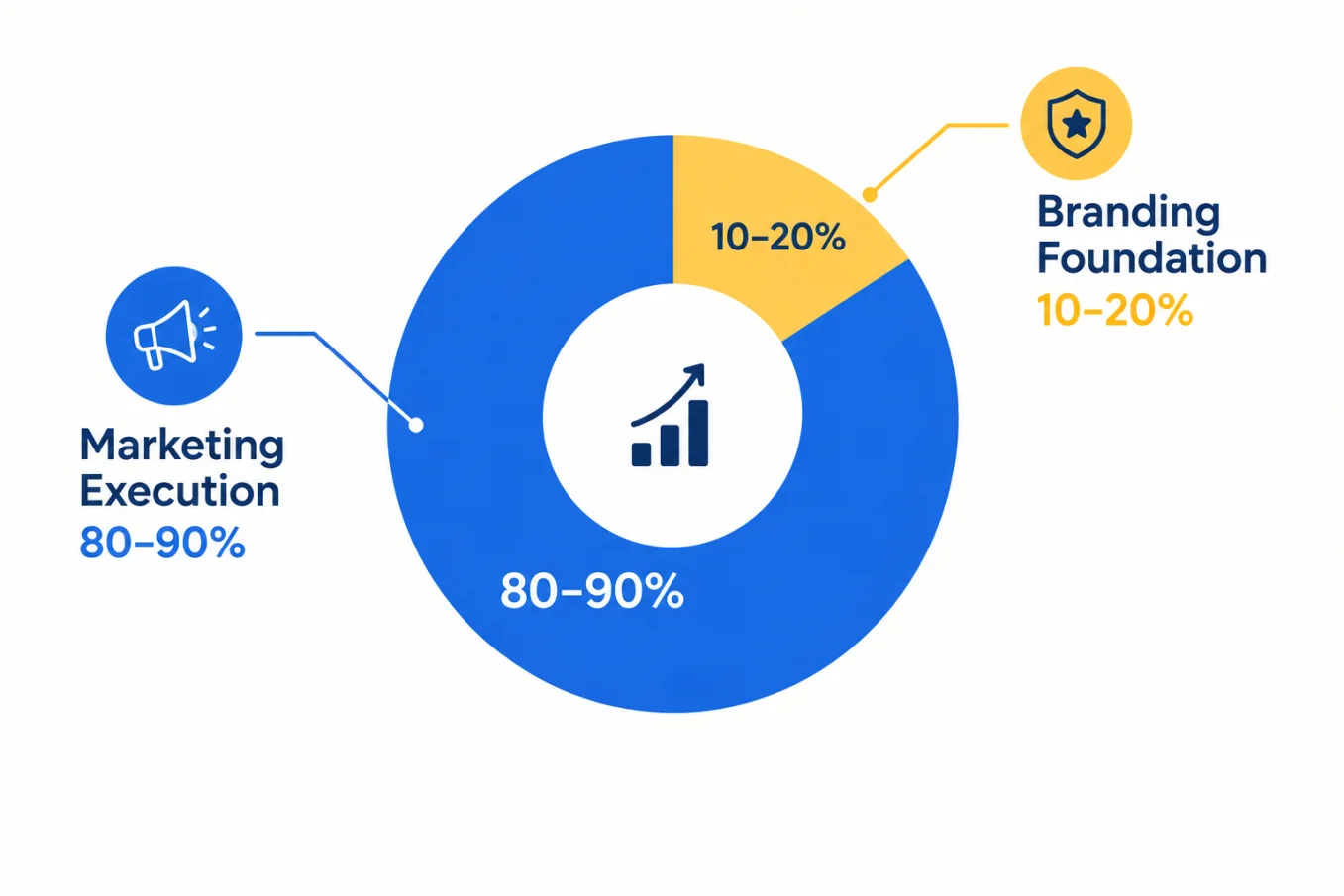
The 80/20 Budgeting Rule
A common guideline agencies use:
- 10–20% of total budget on branding — strategy, identity, guidelines, experience
- 80–90% on marketing — channels, content, paid media, optimization
This split of 80/20 feels heavy on marketing and honestly it should be as marketing is the execution engine. But the 10-20% spent on branding actually decides that how efficiently the other 80-90% will perform. Having strong branding for your brands lowers customer acquisition cost over the time by improving conversion rates at every stage of the funnel. Skip it and you are paying marketing prices to fix a branding problem – which never fully works.
Frequently Asked Questions
Yes i would say that every business should do branding be it small or large. A small business also needs clear positioning, a consistent visual identity, a defined tone of voice before spending on ads. This does not need a huge budget – it requires clarity, which is achievable even for a pre-launch business.
Final Takeaway
To wrap this up i would say that marketing gets attention and branding keeps it.
So don’t choose between branding and marketing – use them together. Define you identity clearly and then let marketing do its work by spreading your identity aggressively. Businesses that choose to implement this approach invest less in customer acquisition & retention. And the ones that decides not to respect the order of steps will have to deal with high loss in advertising costs and mediocre campaigns that almost everyone forgets quickly.
Ready to find out where your business actually stands?
We’ll audit your current brand and marketing in 30 minutes — no cost, no obligation — and tell you exactly what to fix first.
Call us: +91-9988-37-5050
Email: sales@brandlogg.com
Not ready for a call yet? Explore our full branding & marketing services or read more on our blog

