Table of contents
- A Question That Didn't Used to Have an Answer
- What Ask Maps Actually Is
- Why India Got This First
- The Numbers Worth Actually Knowing
- From Ranking to Being Recommended
- What Actually Influences Visibility
- Try It Before Optimizing for It
- A Practical Checklist for This Month
- What's Still Rolling Out
- Frequently Asked Questions
- The Takeaway
Ask Maps: Google's Biggest Maps Update in a Decade – What Businesses in India and Around the World Need to Know
A Question That Didn't Used to Have an Answer
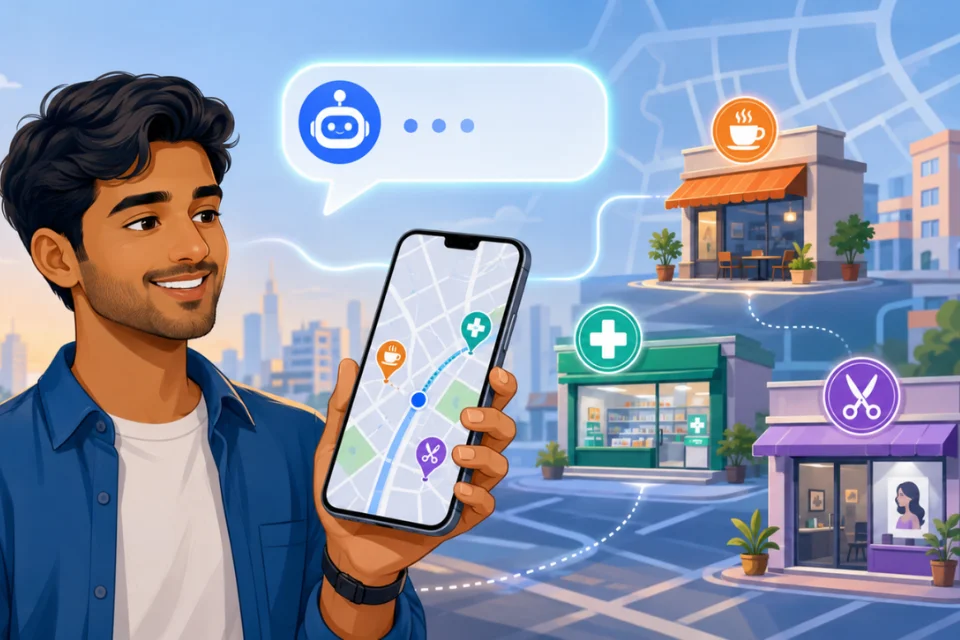
Let’s picture this: Your mobile phone at 4% battery. You are in an unfamiliar part of the town and needs a charger on urgent basis – but not from a café where sitting down means feeling obligated to buy a six-dollar latte.
Well that used to be a frustrating situation you had to figure out yourself, but it wont happen anymore. Now a person can type straight into Google Maps and get a real, specific answer to.
That’s called Ask Maps. Google itself calling it the biggest Maps update in over a decade, and for once that doesn’t feel like press-release hype. It is the biggest and most meaningful shift in local business discovery since Street View launched in 2007.
But what is often overlooked in the reporting: This isn’t a soft rollout in America first, like many Google products are rolled out. It’s been rolled out in India, on the same day as in America, before almost any other place in the world. So regardless of whether a business is in a crowded street of Ahmedabad or an Austin strip mall, how people find their way to the company is changing — and it’s already underway.
What Ask Maps Actually Is
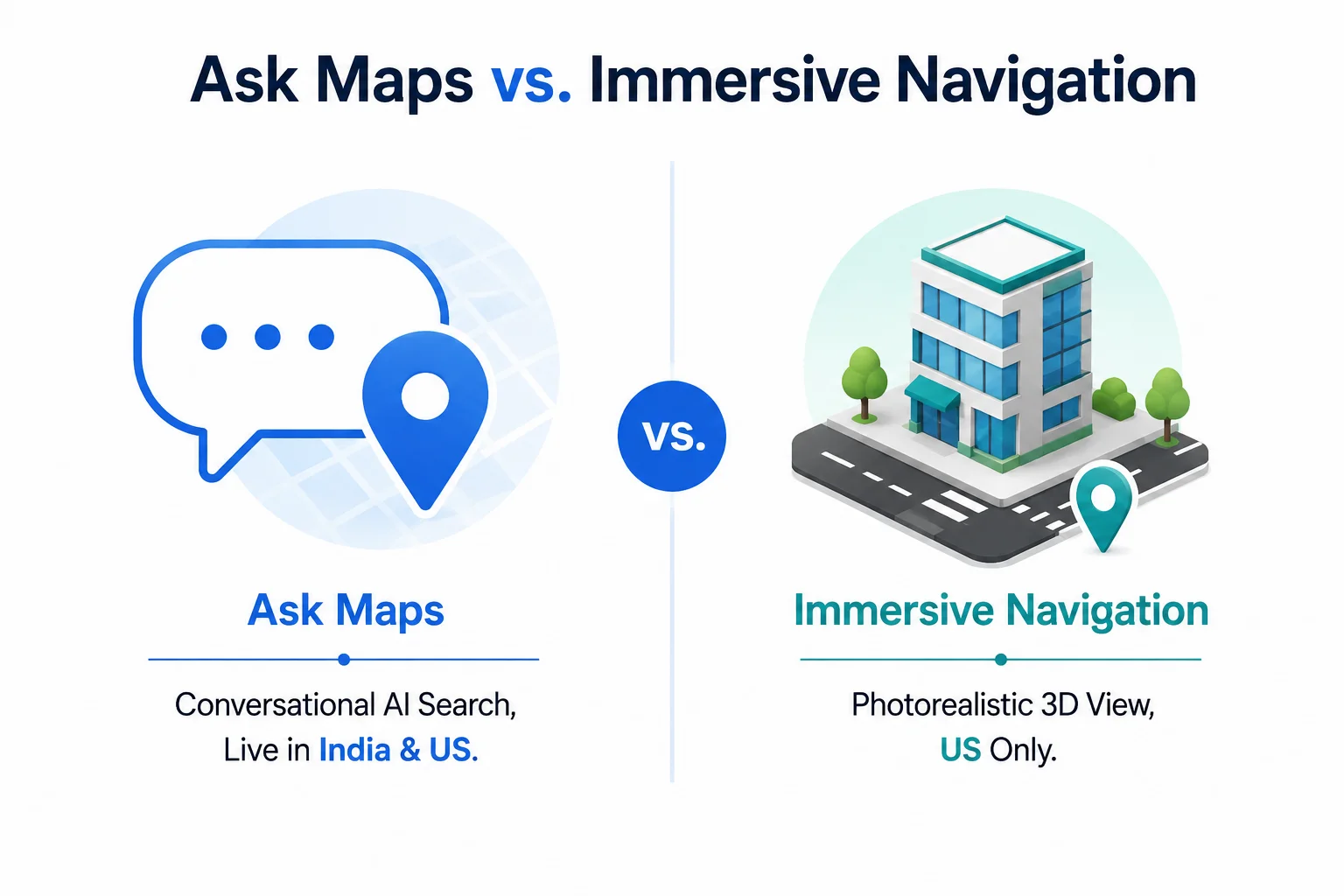
Google launched two features together on March 12, 2026. Media publications tend to merge these two features in one article, even though they are doing completely different jobs and only of them providing changes to the business owners of today.
The part that talks back: Ask Maps
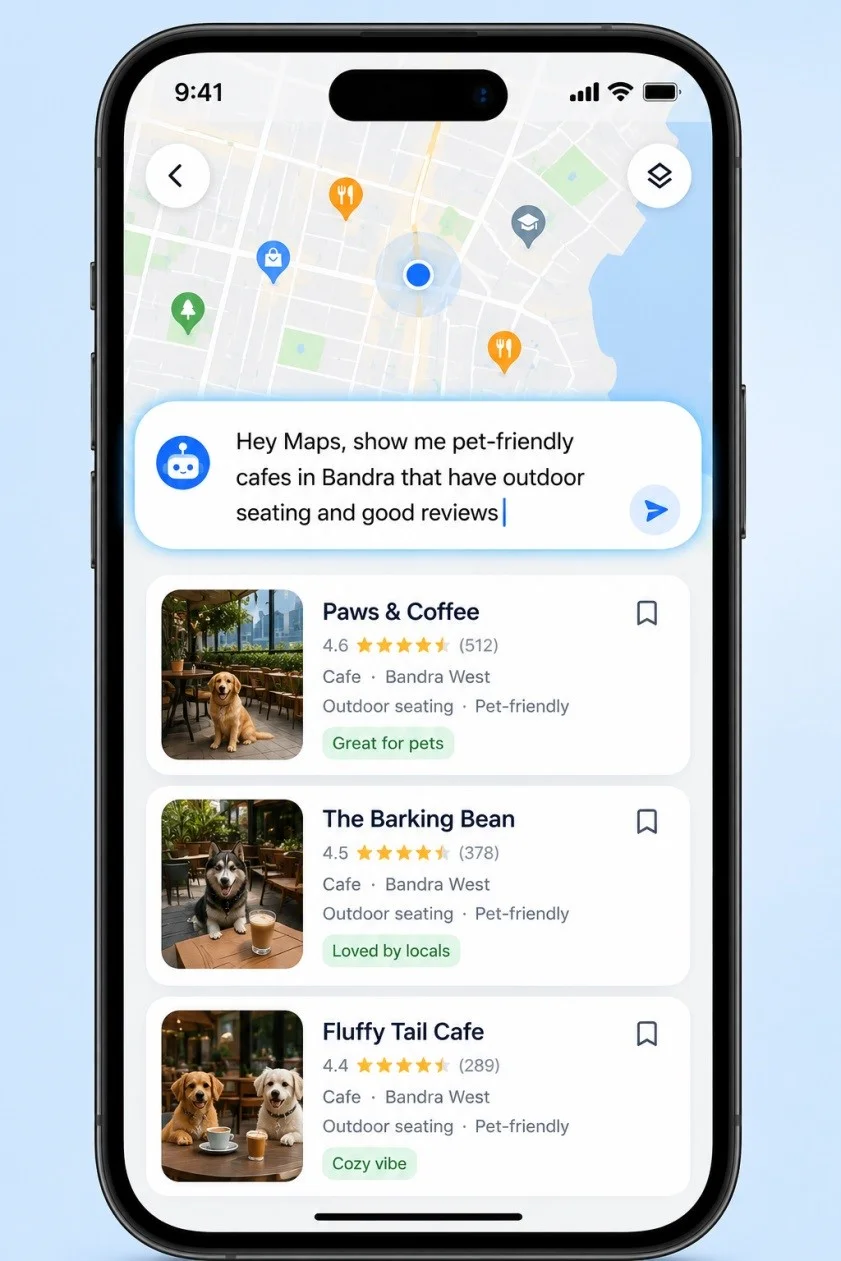
Ask Maps is Gemini’s language model deployed in Google Maps. It can respond to the natural queries instead of keyword searches. Now people will not type “pharmacy near me open late” when asking a human; instead they’ll ask something like “Is there a pharmacy nearby that’s still open and has a night pharmacist?” This is how the Google Maps search bar reacts now.
To accomplish this, Google utilizes a truly massive dataset of over 300 million locations, with contributions from 500 million people in the form of review and amendments over the years. What’s changed is that Google can finally process this data and make sense of it instead of simply indexing it.
The part that looks better: Immersive Navigation
The second offering is Immersive Navigation — an almost photographic 3D version of navigation. It’s easy to be wowed by what we see on-screen in the demo. However, we must clarify that it is currently only available in the US. Companies anywhere else in the world (including India) would still not have access to this feature for their customers.
This point is important to note because most messages in the field of SEO appear to treat the two as one initiative. In terms of impact and visibility, Ask Maps must be approached as the one to plan accordingly for.
Why India Got This First
Most global product rollouts start in the US, maybe with the UK or a couple of Western markets tagging along, while everyone else waits — sometimes for years. Ask Maps didn’t follow that pattern.
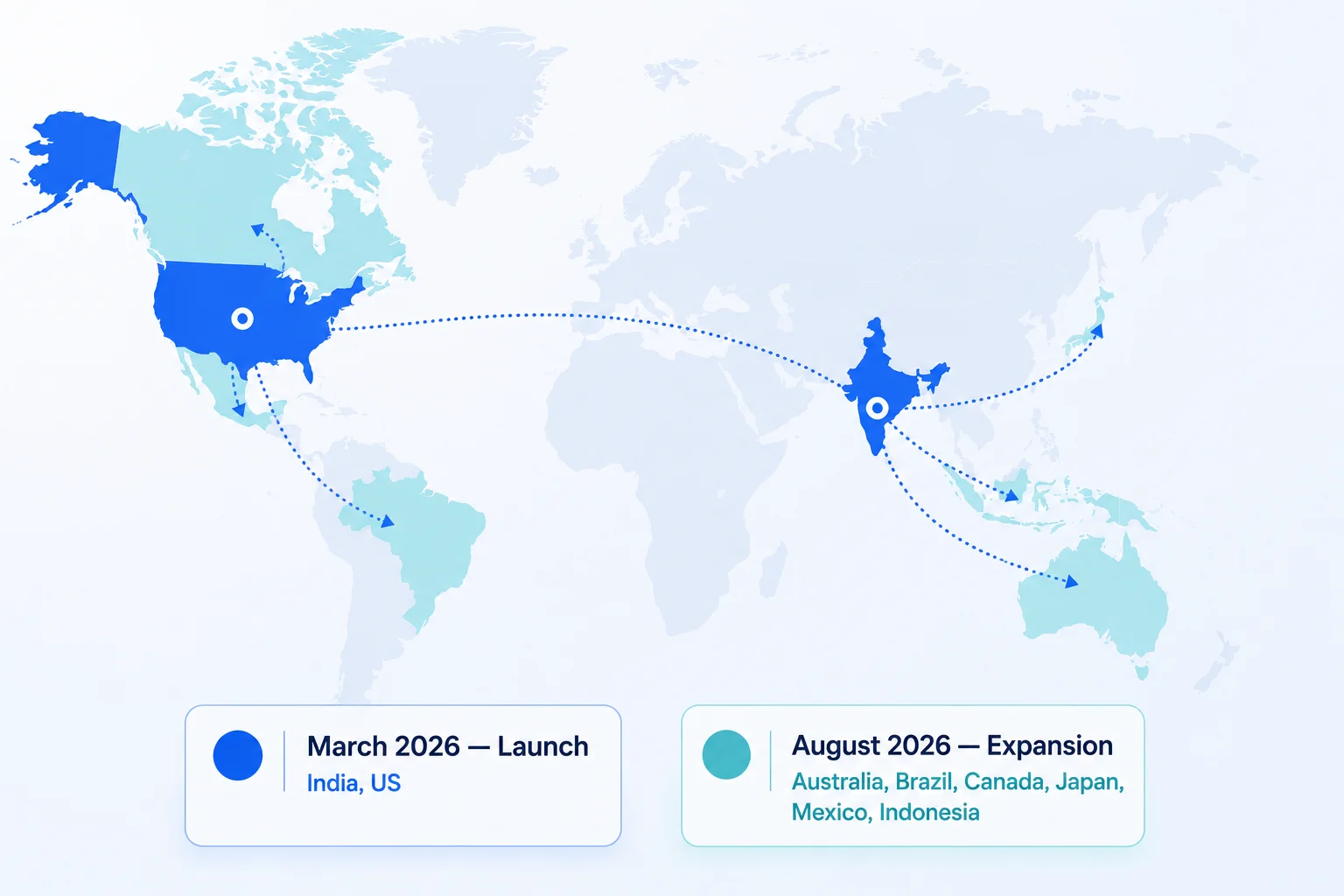
The Ask Maps launched in India alongside the US on day one, on both Android & iOS. And it took until August 2026 for Google to open things up further for countries like Australia, Brazil, Canada, Indonesia, Japan, Mexico and eventually more than 150 countries and territories.
Take what you want from it, but two points feel right. The first one is Google is making a bet on Indian’s search behavior which is mobile-heavy, local-intent heavy and they are also comfortable in typing full questions rather than fragments. Second Indian companies had a period of time to learn and adjust before it turned into the same pattern everyone else now expects.
For all those reading this outside India: this is not a story that skips your market. It is an early look at what’s coming your way too and the businesses paying attention now will already have their profiles in shape when it lands.
The Numbers Worth Actually Knowing
A blog post like this could drown you with dozen of facts and figures but unfortunately, a lot of what you read on other blogs about the subject is not substantiated with reliable sources. The following fact is worth considering:
- Google Maps counts over 2 billion users from around the globe.
- Ask Maps technology is based on 300 million locations and 500 million of contributors.
- Morgan Stanley estimates that Google Maps generates $11.3 billion annually and most of the money comes from local ads and licensing of its APIs.
- At the moment, Ask Maps does not show any ads – all the results are organic.
That last point is the one worth sitting with. Google has never left a major discovery surface ad-free forever, so this window won’t stay open indefinitely. It’s the kind of moment that makes going back over the basics of
It’s the kind of moment that makes revisiting SEO strategy worth doing now, rather than after the ad slots show up and organic space gets tighter.
From Ranking to Being Recommended
Old-school Maps search worked like a long shelf. Google handed back a ranked list, and businesses fought over spots one, two, and three.
Ask Maps doesn’t really do that. Ask it something specific and it tends to name two, maybe five businesses it’s actually confident fit the question — not twenty options to scroll through.
That’s a quieter shift than it sounds, but it changes what “doing well” means. It’s not just about beating a competitor by a couple of positions anymore. It’s about being one of the handful of businesses the AI is willing to vouch for by name. A business that ranks “fine” but never gets recommended is, in practical terms, close to invisible.
What Actually Influences Visibility
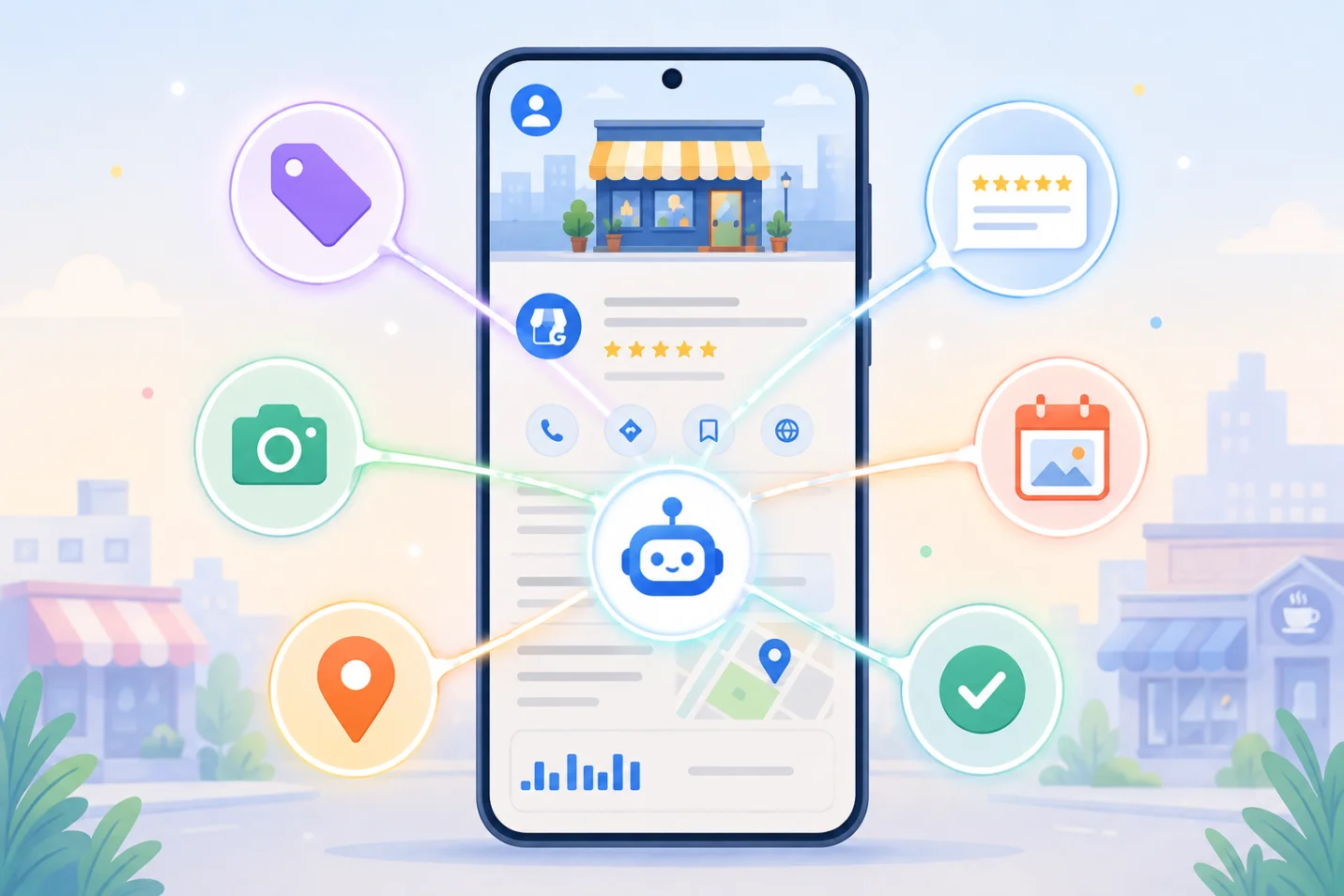
A handful of factors clearly carry more weight than the rest, based on how the feature behaves and how local ranking has been trending through 2026.
Category accuracy comes first
Ask Maps seems to lean on business category as an early filter. A salon filed under “beauty product store” may just never come up for haircut questions — regardless of how good its reviews actually are.
Review quality beats review count
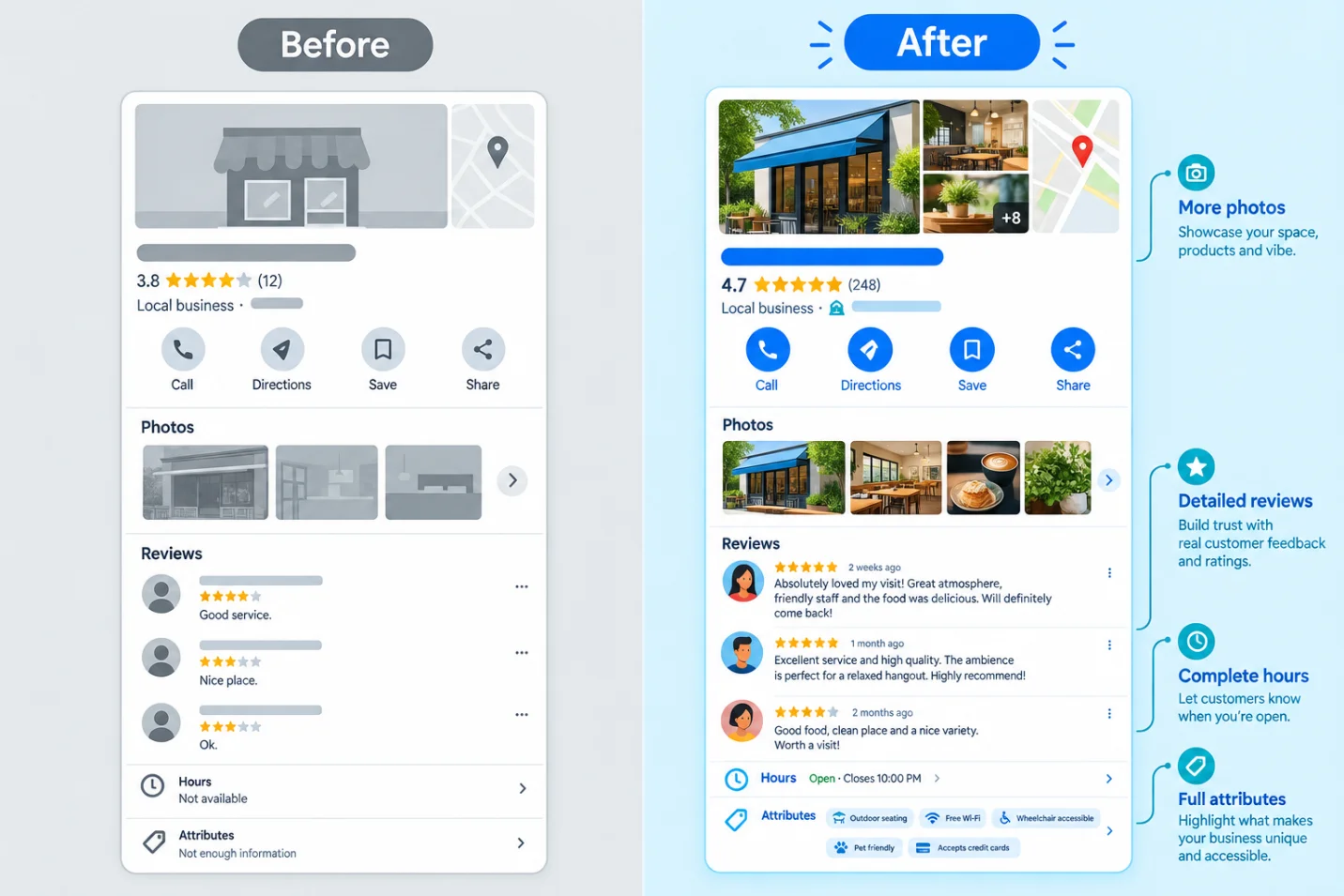
It reads the actual wording of reviews, not just the star rating — picking up on specifics like “fast service” or “good for a quick trim.” Fifteen detailed, recent reviews can genuinely outperform two hundred generic five-star ratings that don’t say much of anything.
Recent matters more than history
Fresh activity — new reviews, new photos, recent updates — tends to outweigh a strong reputation built years back and left untouched since.
Google Posts are a quiet freshness signal
Businesses posting regular updates are handing the AI more current, specific detail to describe them with, whether or not that was the intent.
Photos need to be current, not just present
A profile with a healthy rotation of recent photos — interior, exterior, team, product – reads as more credible than one with a handful of images from a few years back.
Everything has to line up
If a listing mentions “emergency plumbing” on the Business Profile but nowhere on the actual website, that mismatch quietly chips away at how much the AI trusts the listing.
None of this is about gaming anything. It’s about handing Google’s AI clean, honest, complete information — which happens to be exactly what solid content marketing was always supposed to produce anyway.
Try It Before Optimizing for It
Before touching a single setting, it’s worth spending five minutes using Ask Maps the way an actual customer would.
Open Google Maps, tap into Ask Maps, and type something specific — not “best salon,” but closer to “a salon open right now that’s good for a quick trim before a meeting.” Look at what comes back, and pay attention to why — what does the AI actually say about each business it names?
Then search a competitor directly and see how completely, or how thinly, Google can describe them. Ten minutes of this shows more about what needs fixing than any generic checklist, because it reveals exactly what the AI currently does and doesn’t know about a business.
A Practical Checklist for This Month
- Audit the primary Google Business Profile category — confirm it’s the most accurate one, not just close enough.
- Fill in every completeness gap — services, attributes, hours, and Q&A sections often sit half-finished.
- Ask happy customers what they’d tell a friend, not just for five stars — specific reviews carry more weight.
- Post something at least monthly — offers, updates, seasonal notes.
- Refresh photos every few months — new season, new stock, new faces on the team.
- Cross-check the website against the GBP listing — every service mentioned in one place should exist in the other.
This matters even more for businesses in competitive Indian markets — Ahmedabad, Bengaluru, Mumbai, Jaipur — where local competition for visibility only keeps tightening. For hands-on support, there’s local SEO help in Ahmedabad, or a broader digital marketing strategy for businesses that need visibility rebuilt from the ground up.
What's Still Rolling Out
A few pieces of this update are still limited, and it’s worth being upfront about what isn’t live everywhere yet.
Agentic features — booking a table or ordering food directly through Ask Maps — are US-only for now. Immersive Navigation hasn’t left the US either. Gmail-linked personal suggestions and real-time transit data are part of the broader August 2026 expansion, rolling out region by region.
And the ad-free window mentioned earlier really is worth repeating: it won’t stay that way. A feature this commercially valuable to Google is not going to remain ad-free indefinitely.
Frequently Asked Questions
The Takeaway
Ask Maps isn’t a cosmetic update. It’s a real shift in how people find businesses — from scrolling a list to simply asking a question and trusting the answer. India got early access to that shift, but what it points to reaches well past any one country.
Businesses that treat their Google Business Profile as something to keep updating, not a one-time setup, are the ones that’ll keep showing up as this spreads further. Starting now, while visibility is still purely organic, means getting a real head start. Waiting just means catching up later.
For businesses that want a clear, practical plan to stay visible as local search keeps changing, Brandlogg’s SEO and digital marketing team can help — starting with the fundamentals that actually move the needle.