Table of contents
- Is Your Brand Invisible to AI?
- What Are AI Agents, and Why Should Brands Care?
- Why Traditional SEO Alone Won't Save You
- 5 Ways to Make Your Brand Visible to AI Agents
- What This Means for Small and Mid-Size Brands
- Quick Self-Audit: Is Your Brand AI-Ready?
- Frequently Asked Questions
- The Brands That Win Tomorrow Are Building Today
Is Your Brand Invisible to AI? How to Stay Discoverable in the Age of AI Agents
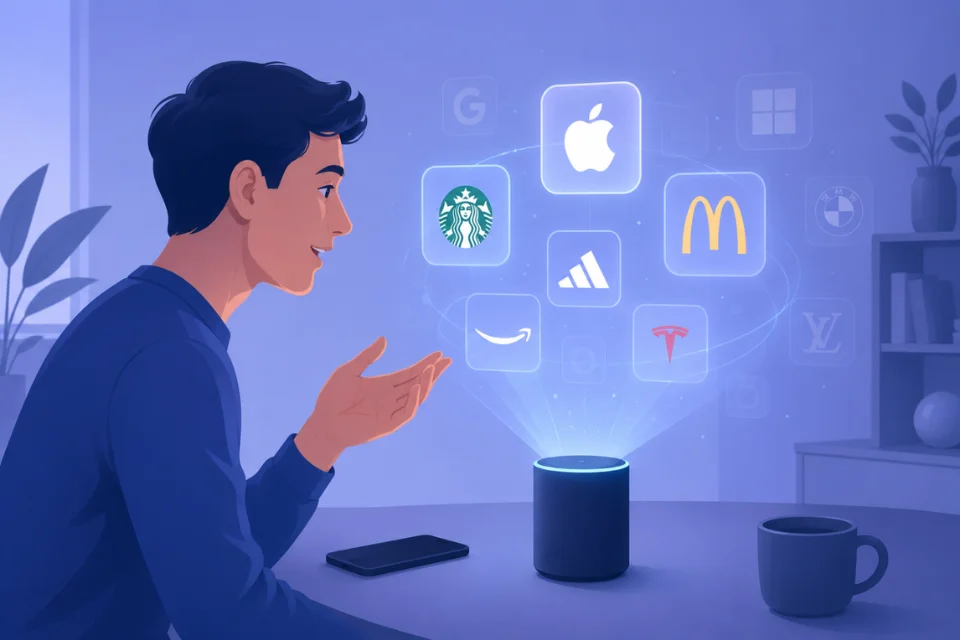
Let’s imagine that a potential client opens ChatGPT and types, “Find me a packaging design company in Mumbai that actually understands designs.”
And in response to the client’s query ChatGPT shows three agencies. But yours isn’t one of them.
Your website is strong. You’ve spent years in improving your SEO. You rank on the first page for many of your target keywords. But somewhere between your client’s question and the AI’s answer, your business gets left out – not because someone made that choice, but because an algorithm made it for them.
Well that’s the shift most of the businesses never saw coming.
Now AI agents like ChatGPT, Gemini, Perplexity & Google’s AI Overview have become the first stop for people looking for answers. These tools not only answer questions anymore but also compare options, create shortlists & give business recommendations as well. All the strategies that have worked to make you rank on Google will not work in the world where AI is searching, filtering & decide what will people see.
Well speaking honestly this is not the reason to panic. It’s a reason to understand what has changed – and what you need to do about it.
What Are AI Agents, and Why Should Brands Care?
An AI agent, in the context that matters here, is any tool that researches, compares, and recommends options on a person’s behalf. That includes ChatGPT, Perplexity, Gemini, Google’s AI Mode, and the growing number of AI shopping assistants built into retail platforms.
This shift is no longer something that’s coming – it’s already here.
A recent research from McKinsey found that most consumers from the U.S had used at least one AI tool in last three months. Another report from from NielsenIQ shows that more than four in ten consumers have used AI to help them shop in the past month. Among people who are actively searching for a product, more than half now turn to an AI tool before they ever visit a company’s website. And in this ChatGPT leads the way, with roughly two-thirds of AI-assisted shoppers using it every month, according to a recent SEMrush-backed survey.
Not long ago, the buying journey looked something like this: User first search on Google, visit few websites, compare options and then make the final decision.
But today, it is increasingly becoming: ask an AI agent and let it narrow the choices, then pick from a shortlist of two or three.
That’s a fundamental change.
The comparison stage – where many brands used to get discovered – is now happening inside an AI conversation. If your brand isn’t part of that conversation, it may never even make the shortlist.
Here’s the uncomfortable reality: your brand now has to convince an algorithm before it gets the chance to convince a person.
Just think of an AI agent as a personal shopper you have never met. If it doesn’t know your brand, can’t verify that you’re credible or can’t find trusted sources talking about you, it probably won’t recommend you – no matter how good your product or service actually is.
Why Traditional SEO Alone Won't Save You
SEO was built around a fairly narrow signal set: keywords, backlinks, page structure, load speed. AI models pull from a much wider net — reviews, forum mentions, press coverage, structured data, third-party citations, and how consistently a brand describes itself across the internet.
This means that your website can rank well on Google & still not get recommended by AI. If AI can’t find enough proofs from other trusted sources about your brand which tells that brand is real, reliable & good at what it claims to do, it’s less likely to recommend you.
When an AI agent evaluates whether to recommend a brand, it’s weighing three things:
- Credibility — Do independent, trustworthy sources mention or vouch for this brand, or does all the evidence come from the brand’s own website?
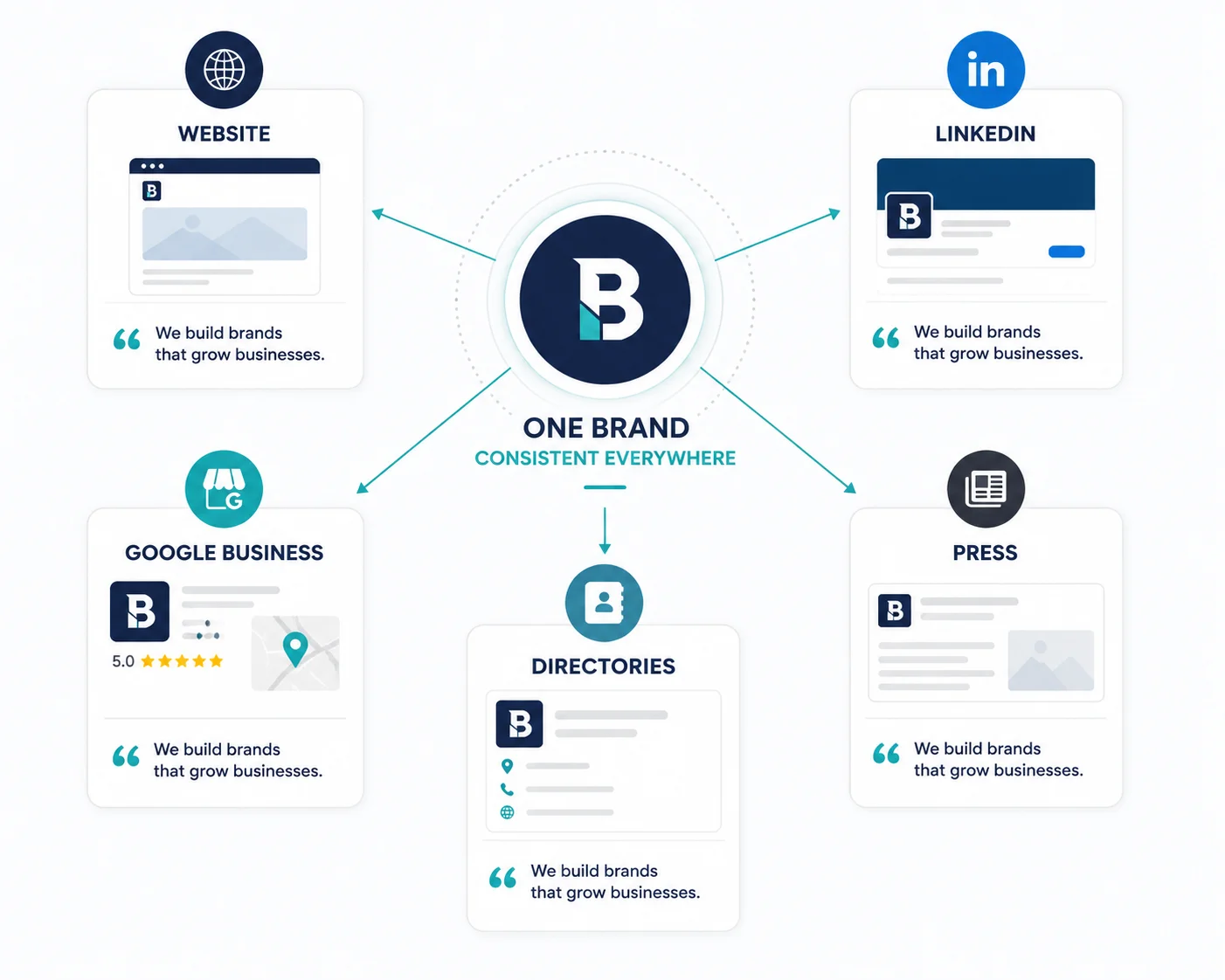
- Consistency — Does the brand describe itself the same way on its site, LinkedIn, Google Business, and everywhere else it appears?
- Clarity — Can a model quickly answer “what does this company do, who is it for, and why are they good at it”? Vague positioning is invisible positioning.
This is where most of the businesses struggle.
They have a well-designed website, but very little presence anywhere else online. To a person, the website may look complete & trustworthy. But to an AI model, there isn’t enough independent proof to back up what the business is saying. Without that outside validation, the AI has less confidence in recommending it.
So, what can you do to change that?
5 Ways to Make Your Brand Visible to AI Agents
How to build a brand that AI trusts — and recommends
1. Build your brand's knowledge footprint
The AI models depend predominantly on super-structured third-party sources like Wikipedia entries, Google Business Profile, LinkedIn, Crunchbase, industry directories, etc. If your profile data is too shallow or inconsistent, model will have partial information about your business profile.
Action: Register all relevant profiles and fill them to the max. Prepare an adequate short “who we are” description and use it wherever it is needed – on the website, LinkedIn, Google Business Profile, directory listings etc. This is the information that makes possible for the model to identify your company as a real business rather than only once-a-year reviewed business with no rest of the data provided.
2. Create content that answers real questions
Artificial Intelligence provides content that answers questions directly, not discusses them. The title “Brand Strategy Services” tells the search engine what the page is all about. But, if a page is structured about “What does a brand strategy agency do,” it provides valuable information for the AI to work with.
Action: The next thing to do is to create a blog, FAQs, and service pages in the Q&A format. Create a list with real people questions that are posed during sales calls and take inspiration from there instead of using a keyword tool.
3. Earn mentions on authoritative sites
Models are more inclined to believe brands that have been mentioned positively and repeatedly by other credible sources, an idea sometimes referred to as “entity authority.” When it appears that a brand is recognized by a third party, such as a news article, it makes the brand appear authentic; in contrast, a brand that exists only through self-published content will appear inauthentic.
Action: Follow the strategy of getting guest posts, mentions in the press, appearing on directories & publishing client cases. Even little things published on the reliable sites become a powerful thing for you; and if the client agrees to co-publish the case study or provide detailed feedback about your business, it gives you the evidence no model could ever obtain.
4. Make your brand message crystal clear — everywhere
Models can get tangled up in contradiction in a way that is kinda similar to a person. Like if your website says “affordable, fast-turnaround” but then your LinkedIn reads “premium, boutique”, the model has no tidy way to square those two claims. And once the brand doesn’t reconcile neatly, it often gets left out of a recommendation, not because it’s worse, but because the system doesn’t want the risk of a “bad” match.
Action: do a full pass on your messaging across each channel, then align everything around one clear positioning. If your tone and messaging really need a careful audit, that’s the exact kind of work handled by brand messaging services, and also by brand voice services.
5. Use structured data (schema markup)
This technical component provides AI crawlers with detailed information about the organization, its offerings, and its past experiences.
Action: Add Organization, Services, and FAQ schema to your website. This is like providing a cheat sheet for AI crawlers. Here’s a basic FAQ schema template, built from the FAQ section further down this page:
{
“@context”: “https://schema.org”,
“@type”: “FAQPage”,
“mainEntity”: [
{
“@type”: “Question”,
“name”: “Does AI visibility replace traditional SEO, or work alongside it?”,
“acceptedAnswer”: {
“@type”: “Answer”,
“text”: “Alongside it. SEO gets your content indexed & crawlable; the practices mentioned in this this blog post will decide whether an AI model trusts that content enough to actually recommend you.”
}
},
{
“@type”: “Question”,
“name”: “How long does it take to see results from AI visibility work?”,
“acceptedAnswer”: {
“@type”: “Answer”,
“text”: “Not overnight but still faster than most brand work. Directory & schema fixes can show change within weeks; earning genuine entity authority through outside mentions is closer to a three-to-six-month effort.”
}
},
{
“@type”: “Question”,
“name”: “Can a brand lose AI visibility after building it?”,
“acceptedAnswer”: {
“@type”: “Answer”,
“text”: “Yes. Unlike a Google ranking that decays slowly, AI visibility can drop quickly if information goes stale – an outdated listing, a discontinued service still described online, messaging that drifts across channels. Treat it as ongoing maintenance, not a one-time project.”
}
}
]
}
Most CMS platforms can generate this wrapper for you — you’re mainly responsible for the accuracy of what goes inside it.
What This Means for Small and Mid-Size Brands
You don’t need a big budget — you need a clear brand
Larger companies naturally have an advantage: more media coverage, more customer reviews & years of brand mentions built over time. That’s true – but it’s not the whole picture.
Smaller brands have one major advantage: speed. A 40-person company can update its messaging, improve its online profiles & fix inconsistent things in a few weeks. And a large enterprise with many approval layers will take much more time to make the same changes.
Well the AI models don’t reward brands just because they’re big. In fact they reward brands that are clear, consistent & easy to understand. And those are things any business can build, regardless of size or budget.
The brands that start doing this work today are the ones most likely to appear in AI recommendations twelve to eighteen months from now.
This is the kind of foundational work we help brands with at Brandlogg – building the clarity & consistency needed to stay visible, whether the audience is a person or an algorithm. Our brand strategy and planning are designed around this challenge, while our digital marketing services help with the ongoing content & distribution needed after the strategy is in place.
Quick Self-Audit: Is Your Brand AI-Ready?
5 questions to ask about your brand right now
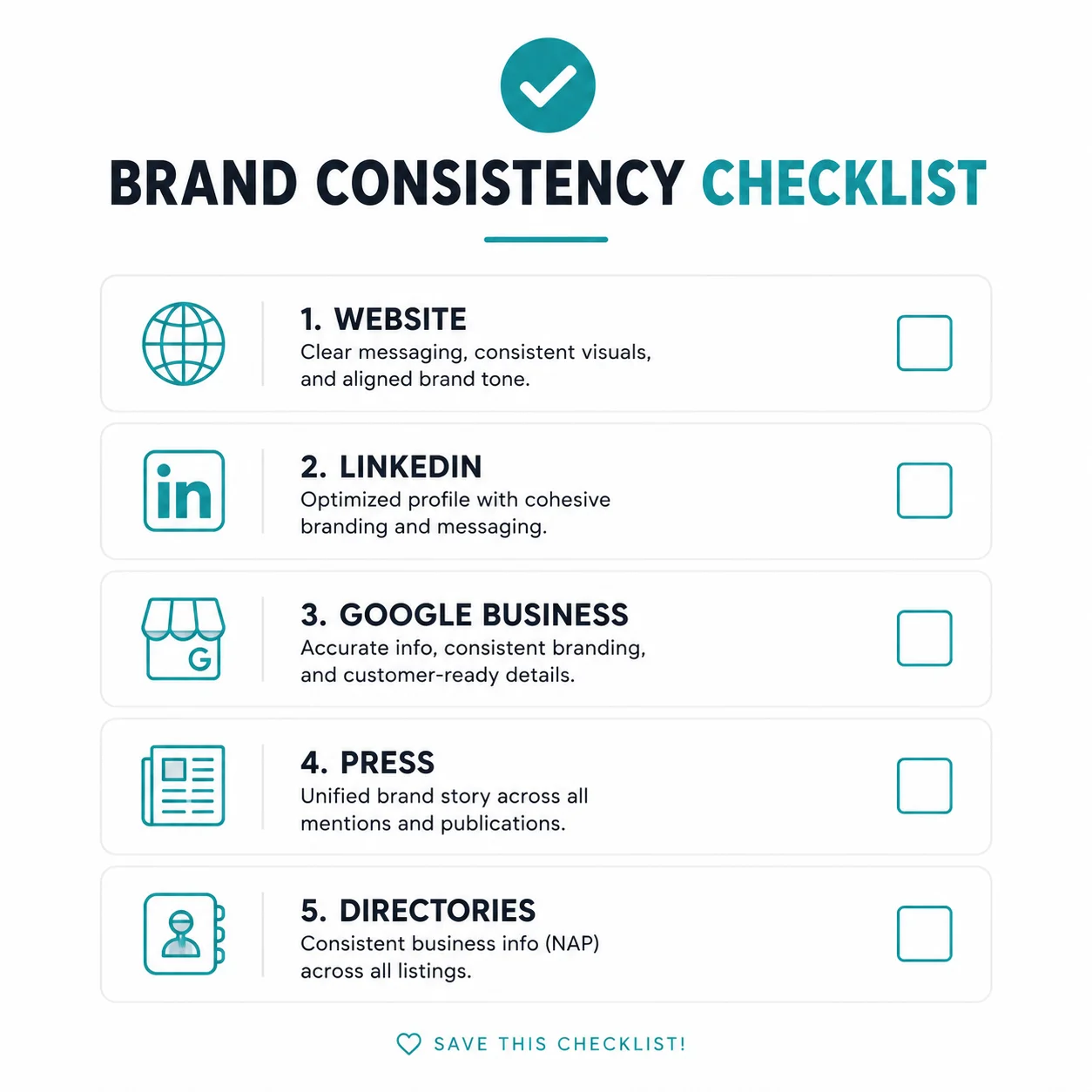
- Does your brand description read the same way across your website, Google Business Profile, LinkedIn & social channels?
- Are you publishing the content that answers the questions directly which your customers actually type into a search bar or a chatbot?
- Do credible external websites mention, links or reference your brand – beyond your own properties?
- Is your GBP (Google Business Profile) fully filled out, accurate & recently updated?
- Does your website have structured data (schema markup) in place?
Scoring note: Well if you answered “no” to any three or more of these, your brand likely has a real AI visibility gap. But the good news is that none of these are hard problems – they’re just undone ones.
Frequently Asked Questions
The Brands That Win Tomorrow Are Building Today
The AI is not here to replace branding infact it is raising the bar for what “good branding” has to mean – not just a strong look & tagline, but a consistent, corroborated, clearly-articulated identity that holds up whether a human is reading it or a model is parsing it.
The brands that make the investment in clarity now will be the ones that an AI agent will recommend with confidence in a year from now. Those that wait will still be following old rules of the game in the market that has already moved on from them.
At Brandlogg, we help businesses establish brands that people relate to and that AI systems can really comprehend and trust. If you have any questions regarding your brand’s position on any of this, that is a conversation you should be having sooner rather than later — get in touch, or take a closer look at our brand strategy and planning services.
Sources: McKinsey ConsumerWise Global Sentiment Survey (Feb 2026); NielsenIQ agentic commerce tracker (May 2026); ChannelEngine Marketplace Shopping Behavior Report 2026; SEMrush AI Tools & the Modern Buyer Journey study (2026).

