Table of contents
- Why Traditional Lead Generation Is Breaking Down
- What Authority-First Marketing Actually Means
- How to Build Authority-First Marketing — Step by Step
- The Payoff — What Authority-First Marketing Actually Delivers
- Quick Authority Audit - Where Does Your Brand Stand?
- The Best Time to Build Brand Authority Was Last Year. The Second Best Time Is Now.
Authority-First Marketing: Why Brands That Stop Chasing Leads Are Winning

You’re running ads. Posting consistently. Sending emails. Maybe even running cold outreach. And yet – the leads coming in are either low quality, not ready to buy, or just plain ghosting you. Sound familiar?
If it does not, rest assured, the brand is not at fault – it is simply working with an outdated strategy. Traditional lead generation tactics yield lesser output for a majority of the businesses.
There’s probably a lot of competitors, a plethora of channels you should be aware of when it comes to making leads, and a lot of noise coming from your competitors, but there is a smaller amount of trust from consumers than ever before.
But here is the interesting part: the brands that have been doing exceptionally well in the current market are those that have made their name loud and clear and made their customers seek the brands out instead of the other way around.
This concept has its own name in marketing terminology: Authority Marketing, which means market players have built themselves, their businesses, into well-known brands that consumers turn to without having to run from one competitor to the other.
In this interpretation of the idea of Authority Marketing, this blog post is aimed to show you how to build this Authority in the eyes of your audience.
Why Traditional Lead Generation Is Breaking Down
The More You Chase, The More They Run
Buyers today are more skeptical, more informed, and more overwhelmed than at any point before. A widely-cited FocusVision study found the average B2B buyer reviews roughly a dozen pieces of content — most of it self-sourced rather than sales-provided — before ever speaking with a salesperson, meaning much of the decision is already shaped long before a pitch is delivered.
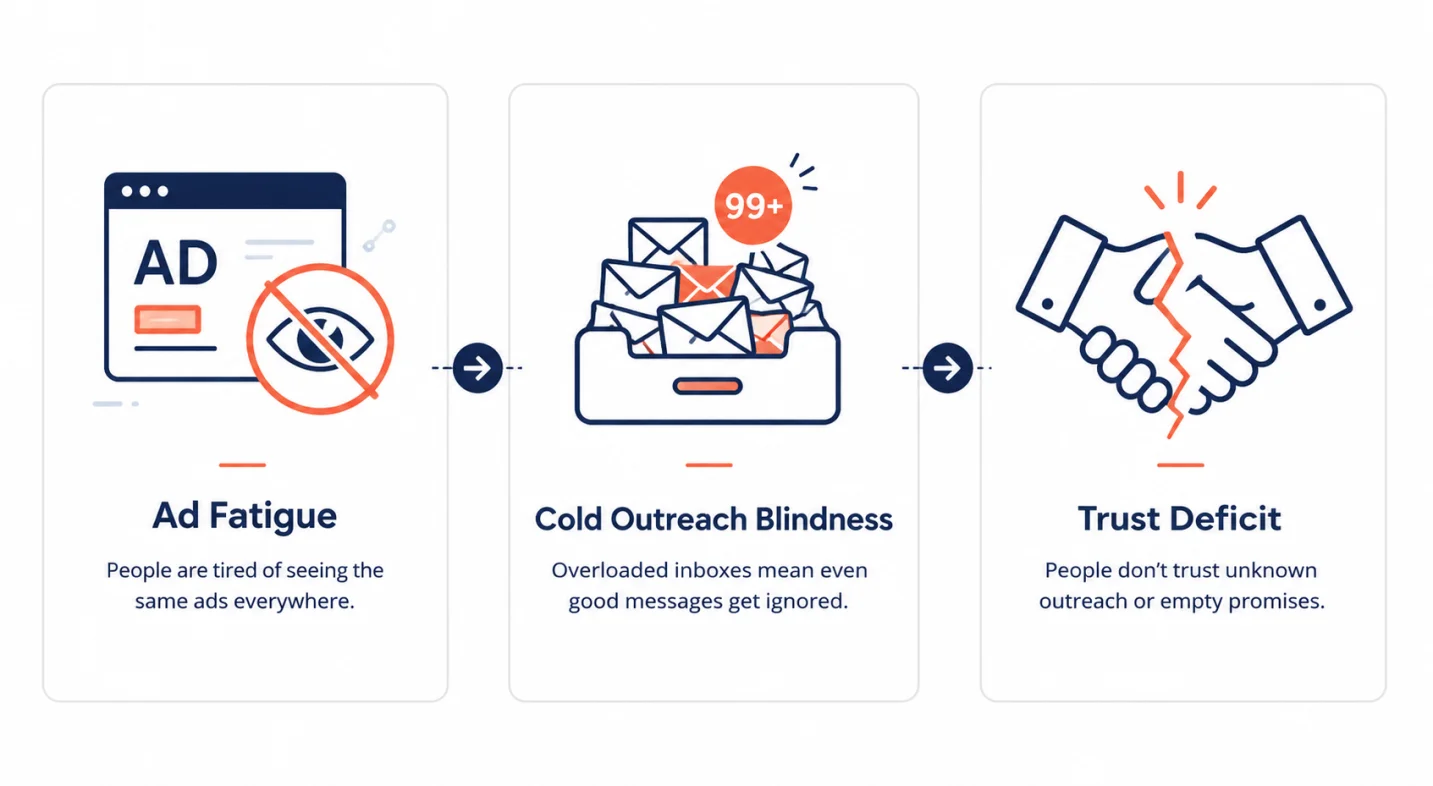
This shift has quietly broken three pillars traditional lead generation used to rely on.
The first is ad fatigue. Consumers can now scroll through ads without registering them. Costs associated with clicks keep increasing but the conversion rates are still going down, which results in less return on investment.
The second is the blindness to cold outreach. People’s inboxes are full, which hinders the open rates, and every cold email gets deleted before being read no matter how catchy the subject line is.
The third, but probably the most harmful of the three factors is the deficit of trust. It is not the first time customers have been deceived by slick funnels and sales pages, so they do not believe polished sales funnels today.
The core problem underneath all three is simple: lead generation methods interrupt people, while authority marketing draws them in.
To put it simply, chasing after leads can be likened to trying to catch fish in a sea by making a lot of noise. On the other hand, authority marketing is building a reputation so good that the fish jump into the boat on their own.
What are some examples of authority-first techniques and what is driving brands to make the switch?
What Authority-First Marketing Actually Means
It’s Not About Being Famous — It’s About Being Trusted
There is one myth that needs immediate correction: authority marketing has nothing to do with going viral, gaining millions of followers, or becoming the leading authority in a particular industry. Fame does not equate authority and in many cases building fame does not do anything to increase your authority.
Real brand authority is more like being the most trusted, the most credible, the most cited brand inside a specific niche or category, even if that niche is kinda small and not “loud.”
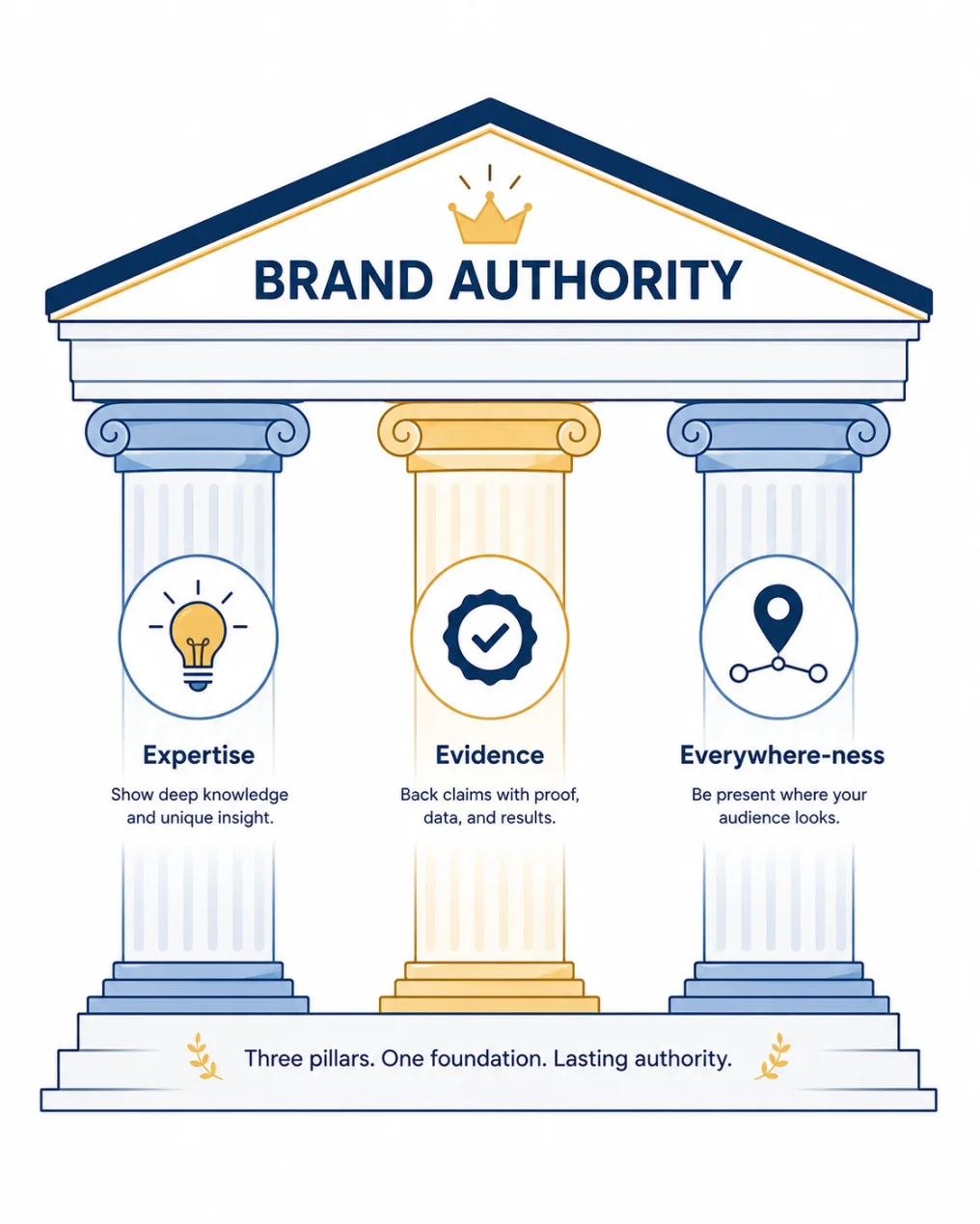
That sort of authority usually leans on three pillars:
- Expertise – being an expert who always displays an intimate understanding of their subject matter by providing useful information, insights and opinions that benefit people instead of just marketing a product.
- Evidence – providing concrete evidence through examples like success stories, testimonials, awards or even mentions in reputable publications.
- Everywhere-ness – being available everywhere your audience hangs out, not everywhere but everywhere that counts.
The difference that sets apart these two methods can be summarized in one thought: lead generation refers to “let us show you why it is worth to hire us” while authority marketing refers to “let me demonstrate to you that we already know your problem better than anyone.” The first approach asks for trust, while the second earns this trust – and it starts with clear brand positioning that makes the difference obvious.
How to Build Authority-First Marketing — Step by Step
The Practical System Behind Brands That Get Chosen First
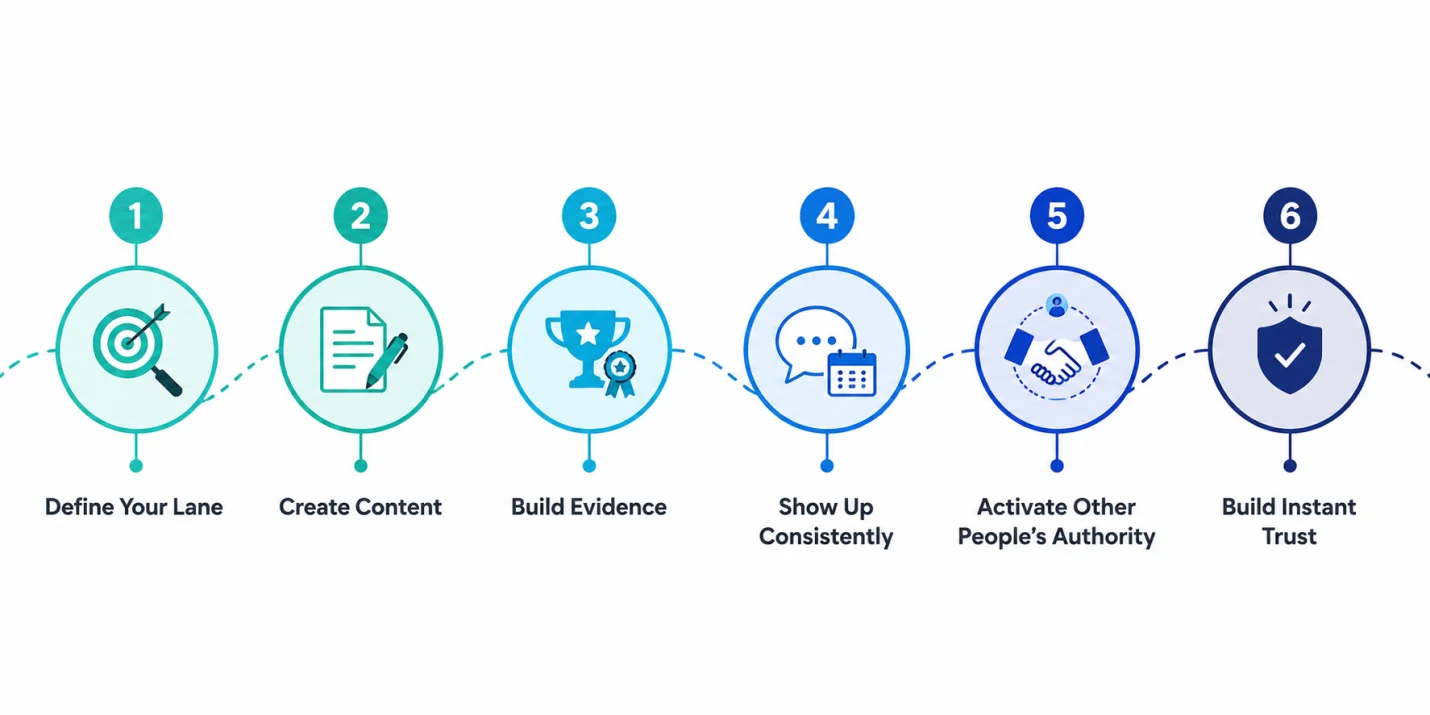
Step 1 — Define Your Authority Lane
No brand can be an authority in everything — and trying to be often weakens its credibility. The more focused the niche, the faster trust is built.
Many brands try to appeal to everyone and end up connecting with no one. Saying “the best marketing agency” gets lost in a crowded market, while a focused position like “the brand strategy agency for ambitious SMBs ready to scale” gives the right audience a clear reason to pay attention.
Strong positioning starts with clarity:
- Who does the brand serve?
- What problem does it solve?
- Why is it the right choice?
A clear position builds credibility before any content or marketing effort begins.
Step 2 — Create Content That Proves You Know Your Stuff
Brands looking to build authority should focus on creating consistent, genuinely useful content — not promotional material disguised as advice. A simple question can help guide the approach:
- Would the audience still share this content if the brand name wasn’t attached?
- If yes, it’s likely building authority. If no, it’s probably just another marketing message.
A thoughtful content marketing strategy helps brands answer the questions their ideal customers are already asking, share valuable perspectives and frameworks, and provide insights that competitors may not be willing to offer for free.
Step 3 — Build Your Evidence Stack
Brands can build confidence through expertise, but evidence is what turns that confidence into real credibility. A strong proof system usually includes:
- Client case studies with specific, measurable results
- Testimonials that share real experiences instead of generic praise
- Press features, publications, awards, or recognitions
- Clear before-and-after examples of past work
Many brands already have impressive results – the missing piece is often documenting and sharing them in a way that builds trust.
Client Snapshot: When Sikh Accessories, a well-known wholesaler of Sikh cultural and religious items, wanted to take their brand online and build global recognition, the goal wasn’t just an e-commerce store — it was becoming the trusted name buyers turned to first. A focused SEO and brand-positioning strategy helped establish them as the world’s largest exclusive online store for Sikh items, and today the brand ranks among the top 3 businesses on Google worldwide in its category. That kind of visibility doesn’t come from ad spend alone – it comes from being recognized as the authority in a specific niche.
Step 4 — Show Up Consistently in One or Two Places
One of the biggest mistakes brands make is trying to be present everywhere and ending up inconsistent across every platform. Authority isn’t built by being everywhere — it’s built by showing up consistently where the right audience already spends time.
A focused social media marketing strategy works better than a scattered presence:
- LinkedIn for B2B audiences
- Instagram for lifestyle-focused brands
- Google for service-based businesses
Choosing the right platforms and showing up consistently builds stronger visibility and credibility than managing multiple channels with little effort.
Step 5 — Activate Other People's Authority
One of the fastest ways to build authority is by leveraging the trust others have already earned. Collaborations, guest features, podcast appearances, co-created content, and mentions from trusted voices can accelerate credibility much faster than building alone.
This is why PR, influencer partnerships, and strategic collaborations should be part of an authority-first strategy — not treated as optional extras.
A simple way to start:
- Identify 10 people or publications your ideal clients already follow
- Find one realistic opportunity to get in front of their audience
- Build relationships that strengthen brand trust over time
Step 6 — Make Your Brand Easy to Trust at First Glance
Great content and strong proof won’t convert if a brand doesn’t look credible at first glance. A consistent Visual identity, clear messaging, and professional presentation help build trust before anyone reads a single word.
A simple test can reveal a lot:
- Show the homepage to someone unfamiliar with the brand
- Ask what the company does and whether it feels trustworthy
Their response often highlights whether the brand strategy foundation is strong — or where it needs improvement.
The Payoff — What Authority-First Marketing Actually Delivers
Stop Generating Leads. Start Attracting Clients.
When a brand builds real authority, the way leads come in starts to change:
- People come in already trusting the brand, which makes the sales process much easier and faster.
- They focus less on price, because they’re paying for expertise, trust, and confidence.
- They recommend the brand to others, because people naturally share brands they trust.
- They stay longer, because strong relationships are built on credibility.
The biggest benefit is that authority keeps building on itself. Unlike paid ads that stop bringing results once the budget runs out, authority grows over time. Every helpful piece of content, case study, and brand mention adds more value and strengthens the foundation.
This is the power of a strong brand strategy and planning approach — building a brand that doesn’t just find customers for today, but keeps attracting the right customers for years.
Quick Authority Audit - Where Does Your Brand Stand?
6 Questions to Honestly Assess Your Brand Authority Right Now
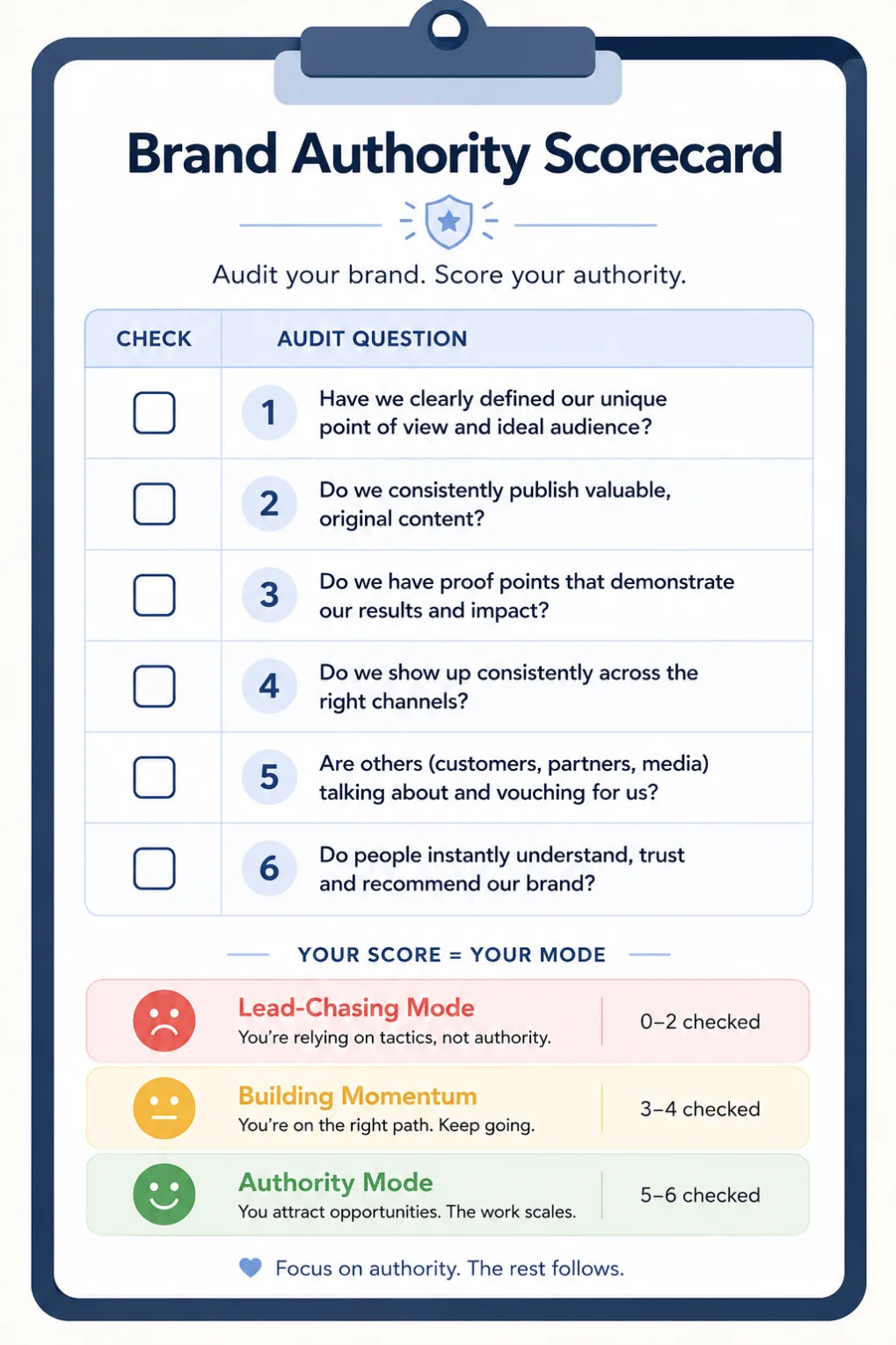
A simple way to assess whether a brand is gaining authority is to ask the following questions:
- Is the brand targeting a particular niche or broadly trying to reach everybody?
- Is it providing helpful content, not merely pushing its products?
- Does it provide evidence through case studies or other forms of proof?
- Is it available on the social media platforms where its target audience frequents?
- Is there any credible mention of it, or has any trusted source made use of it?
- Does it have an appealing appearance and feel?
If the answer is “no” for more than three questions, it means that the brand is still trying to grasp its audience and might not be able to do so at the moment.
The good news is that brands can gain authority if they have a clear plan and work consistently.
The Best Time to Build Brand Authority Was Last Year. The Second Best Time Is Now.
To conclude this blog i would say that the way of people’s buying anything has changed. Today, customers don’t want to be chased – they want to choose the brands they already trust.
Authority-first marketing isn’t a passing trend; it’s the natural response to a noisier, more skeptical marketplace than the one that existed even a few years ago.
At Brandlogg, brands are helped to build exactly this kind of authority — the kind that makes clients come to them. From brand strategy and positioning to content and identity, the foundation is built so that everything else works better.
Ready to build that authority? Get in touch or explore Brand Strategy & Planning to get started.