Table of contents
- Search Everywhere Optimization: Preparing Your Brand for AI Overviews, ChatGPT, and Beyond
- Why Ranking #1 on Google Is No Longer Enough
- What Search Everywhere Optimization Actually Means
- Why This Hits Differently for Indian Brands
- The 7 Pillars of Search Everywhere Optimization
- Real Results: An Indian Brand That Did This Right
- 5 Mistakes Indian Brands Are Making Right Now
- What This Costs: Real Numbers for Indian Startups
- Ready to Build Your Search Everywhere Strategy?
Search Everywhere Optimization: Preparing Your Brand for AI Overviews, ChatGPT, and Beyond
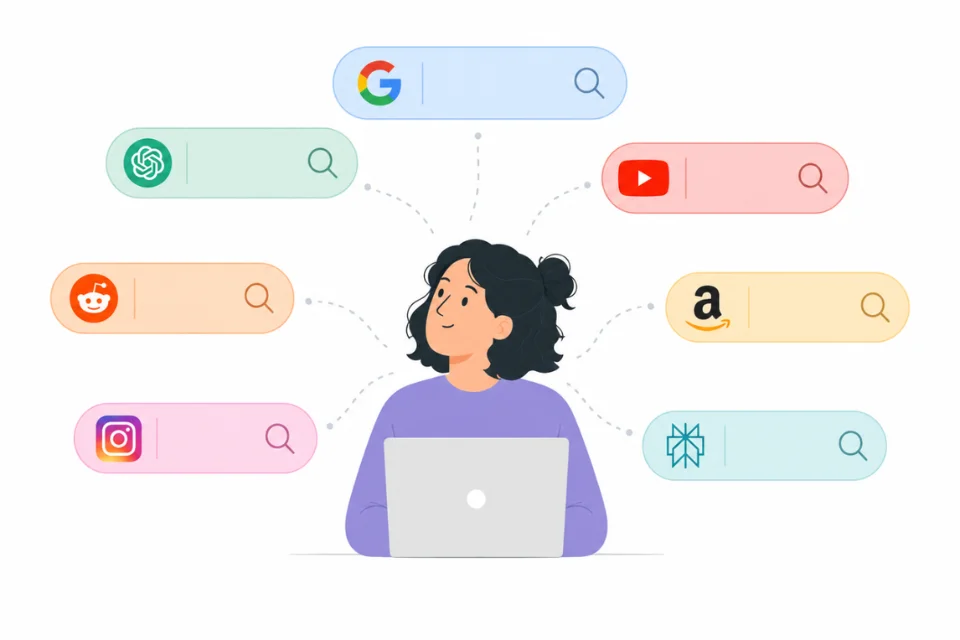
A person from your target audience just asked ChatGPT which protein brand to buy. It named three brands but yours wasn’t one of them.
That’s the real problem most businesses face in 2026. And Search Everywhere Optimization is the answer – the strategy of making your brand discoverable not just on Google, but across every surface where your audience searches: AI tools, YouTube, Reddit, marketplace and beyond.
Why Ranking #1 on Google Is No Longer Enough
Ranking #1 used to guarantee clicks but now it doesn’t. Now the AI Overviews sit above the organic results on millions of queries – creating answers from multiple sources and sending you zero traffic. According to SparkToro’s analysis, over 60% of Google searches in mature markets now end without a single click to any website.
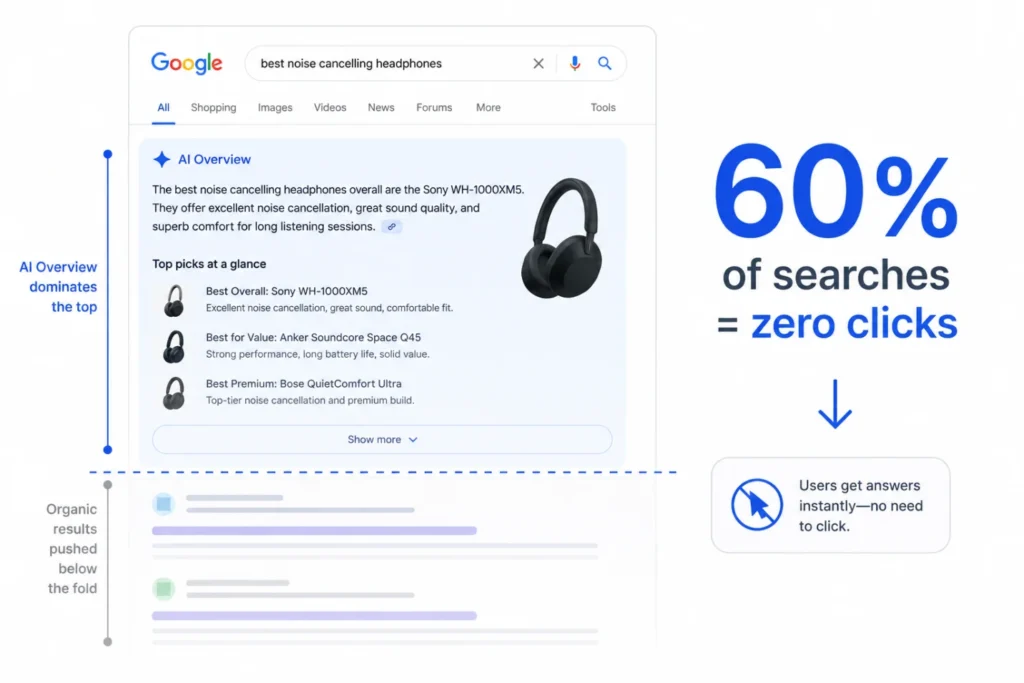
And India is moving in the same direction, fast.
Well speaking honestly, if you are still measuring the success purely by Google rank in 2026, you’re measuring the wrong thing.
Your buyers are asking Perplexity “which D2C skincare brand is best for oily skin in India.” They’re watching YouTube comparison videos. They’re reading Reddit threads at 11pm before deciding.
Google is just one node in a much larger network and your brand needs to show up across all of it.
What Search Everywhere Optimization Actually Means
In simple version the Search Everywhere Optimization is the practice of making your brand findable – and cite-worthy – across every surface where your audience actually looks for answers. Not just Google – ChatGpt, Perplexity, YouTube, Reddit, Amazon, Flipkart and more.
Now think of it this way: traditional SEO asks, “how do i rank on Google?” Search Everywhere Optimization asks, “how does my brand become the answer – everywhere a question gets asked?”
The 7 Search Surfaces of 2026
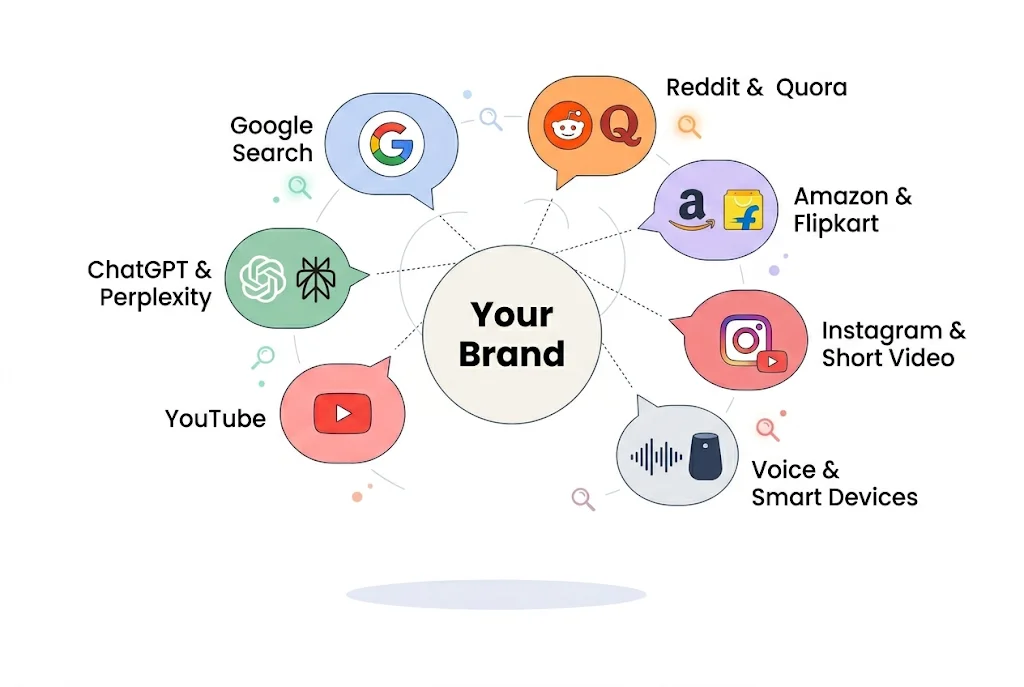
Your audience is splitting their attention across these platforms:
- Google Search — It is still the most dominant, but now it is answering first through AI Overviews
- AI Tools (ChatGPT, Perplexity, Gemini) — fast-growing as research and shopping assistants
- YouTube — the second-largest search engine, especially powerful in India
- Reddit & Quora — trusted citation sources for AI models; Google surfaces them heavily
- Amazon & Flipkart — purchase-intent search at its peak
- Instagram & Short Video — discovery-stage search, especially Gen Z
- Voice & Smart Devices — growing fast in tier-2/3 Indian cities
Why This Hits Differently for Indian Brands
The AI adoption curve of India is steep. ChatGPT daily active users in India have crossed 73 million – that’s up roughly 600% year-over-year, according to the recent estimates from some platforms – Perplexity now draws nearly 33% of its global daily active users from India.
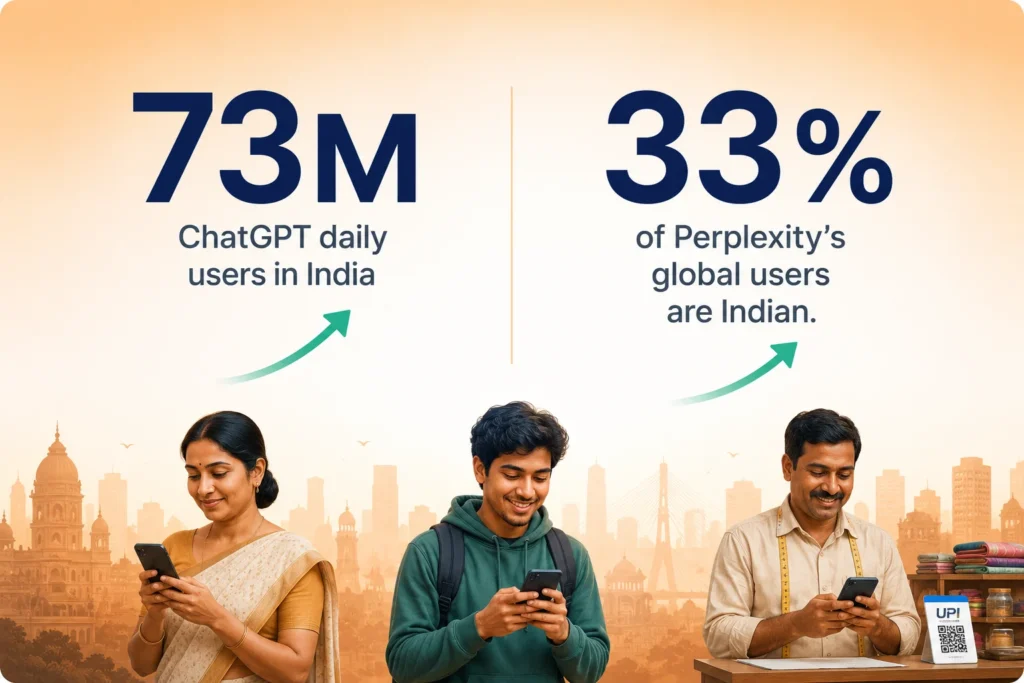
And These aren’t just developers and startup founders in Bangalore, they’re homemakers in Jaipur, students in Coimbatore and small business owners in Nagpur — using AI to figure out what to buy, who to trust and which brand is worth it.
Here’s what makes this a real opportunity: most Indian D2C brands haven’t noticed. They’re still in pure Google-mode. Nobody’s optimizing for Reddit citations. Nobody’s building a presence that gets picked up by Perplexity. The competition for AI visibility in India is almost non-existent right now.
That window won’t stay open.
If you want to understand the full shift happening under the hood — what GEO, AEO, and LLMO actually mean and why they matter — read this first: From SEO to LLMO: How GEO, AEO and AI Are Actually Redefining Search Optimization.
The 7 Pillars of Search Everywhere Optimization
This is the framework. Not theory. Build all seven. The ones that feel difficult are usually the ones your competitors haven’t touched yet.
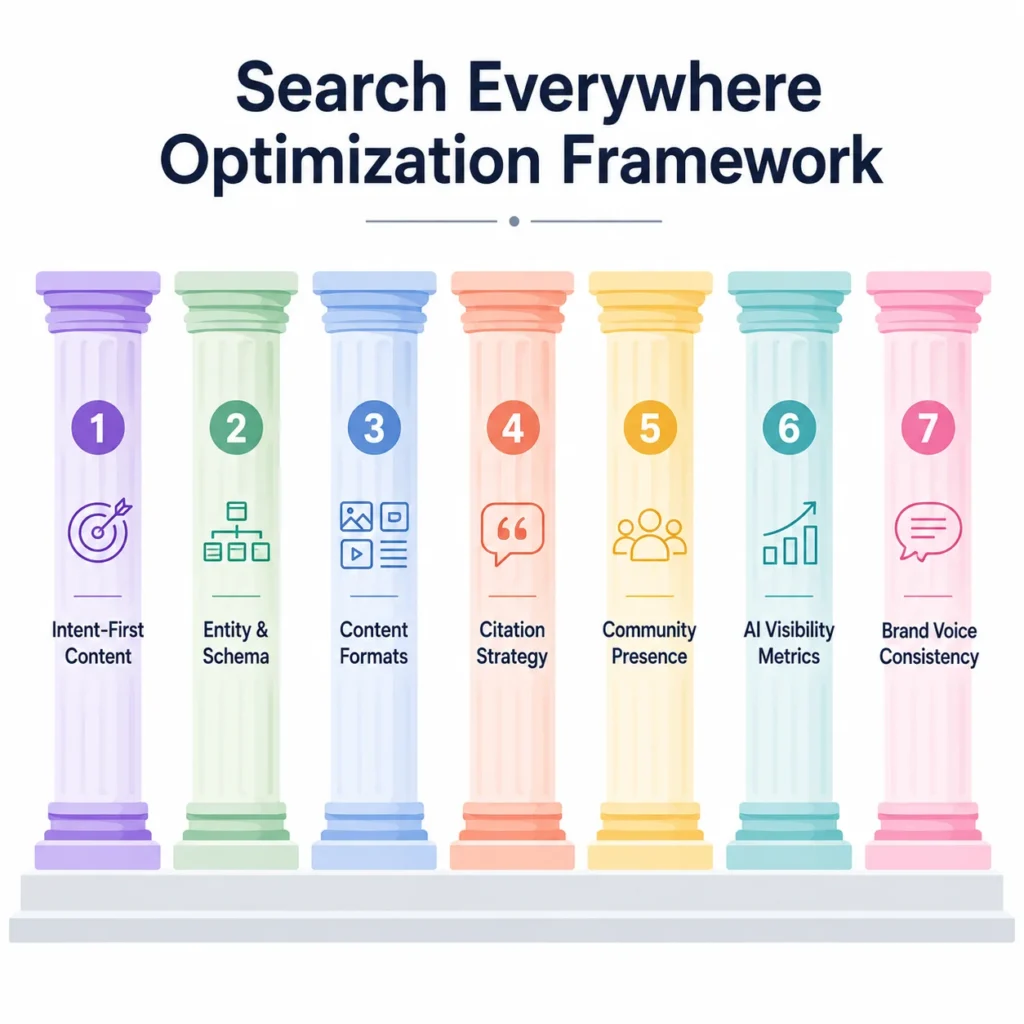
Pillar 1 – Intent-First Content Design
AI tools don’t pick up long, meandering articles that eventually answer a question on page 3. They pull from content that leads with the answer. Clear question, direct answer, right at the top. That’s what gets cited.
- Go through your top 10 blog posts. Does each one answer a specific question within the first 100 words? If not, that’s your first edit queue.
- Build a question bank — 30 to 40 real questions your customers actually ask. Pull them from your support inbox, Amazon Q&A, Google Search Console queries. These become your content brief.
- Flip your structure. Answer first, explanation second. Most content does the opposite.
Pillar 2 – Entity & Schema Mastery
AI models understand the world through entities like named brands, products and people — not just keywords. And if your brand is not clearly defined as an entity across the web then this makes you invisible to these systems. Most Indian startup websites have zero schema. That gap closes quickly.
- Add Organization schema to your homepage: brand name, logo, founding date, social profiles, contact info.
- Add Product and Review schema to every product page.
- Build your own Google Knowledge Panel and Wikidata record to establish your brand in the knowledge graph.
Pillar 3 – Content Formats That Win in 2026
One blog post about your topic isn’t enough. The brands appearing in AI-generated answers in 2026 are the ones who have covered the same topic from various angles like blog, YouTube video, Reddit thread, FAQ page, short clip etc. YouTube and Instagram serve completely different search intents, so don’t copy-paste across them. Adapt.
- Create content clusters for each of your five most-searched-for topics by writing a pillar post, creating a video, and answering the topic on Reddit or Quora.
- Create an FAQ section with FAQ schema for all major landing pages and blog posts.
- Convert written content to video content using AI-powered software.
Pillar 4 – Citation Strategy Across Platforms
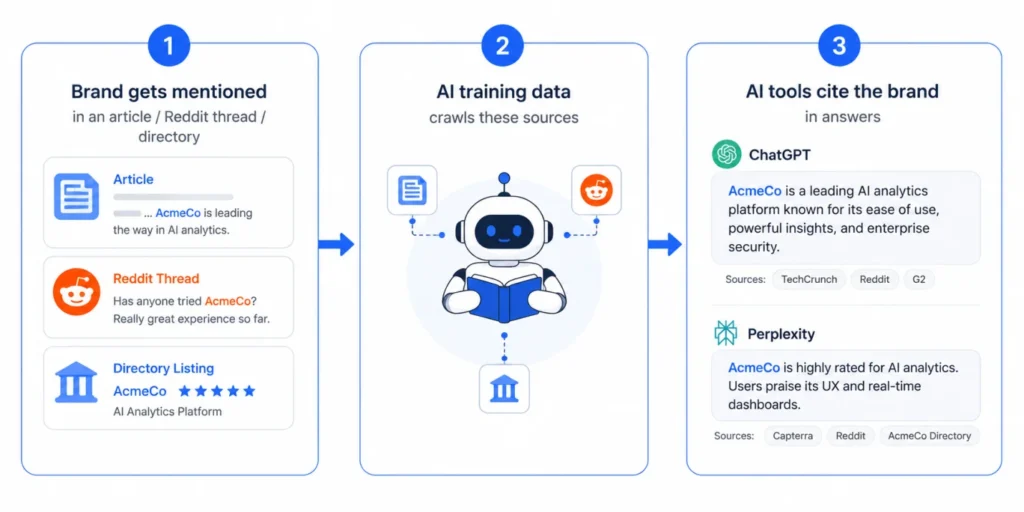
ChatGPT and Perplexity lean on what they’ve seen cited across the web. The more credible sources reference your brand, the more likely you appear in AI-generated answers. This is GEO optimization — build citations the way you’d build backlinks, but spread across platforms, not just websites.
- Get featured in at least 3 credible listicles or roundups in your category — reach out to industry publications, YourStory, Inc42.
- Submit to relevant directories: Crunchbase, Product Hunt, and niche Indian directories in your vertical.
- Pitch expert quotes and commentary to journalists. Media mentions become AI training data.
For a deep-dive on getting cited by AI tools, see our guide on Answer Engine Optimization (AEO): How to Get Your Content Cited by AI Tools.
Pillar 5 – Community & Forum Presence
Reddit is quietly one of the most powerful surfaces in this whole ecosystem. Google surfaces Reddit threads prominently. AI tools trust Reddit as a source of genuine human opinion. An organic mention in a fitness subreddit — where a real person recommends your brand without being paid — carries more authority than a press release.
The catch: you can’t fake community presence. If you show up only to promote yourself, they’ll smell it immediately and downvote you into irrelevance.
- Identify 5 subreddits & 5 Quora topics where your customers are active. Lurk for a week before posting.
- Have a founder or team member become a genuine contributor — answer questions without pitching. Build credibility first.
Write one detailed Quora answer per week on a category question. Include your brand name naturally, not promotionally.
Pillar 6 – Measuring AI Visibility (Not Just Traffic)
Most analytics dashboards track Google traffic. Almost none track whether your brand appears in AI-generated answers. You cannot improve what you’re not measuring.
- Set up Google Alerts for your brand name, product names, and top competitors.
- Use Semrush’s AI Search Visibility Checker or Mention to track brand mentions across AI surfaces.
- Every week, manually ask ChatGPT and Perplexity 5–10 queries in your category. Log results in a simple spreadsheet.
Pillar 7 – Brand Voice & Consistency Across Platforms
AI models build a picture of your brand by aggregating what they’ve seen across the web. Inconsistent brand names, descriptions, or categories across your website, Amazon listing, Google Business Profile, and Crunchbase fragment your entity signal. Consistency isn’t just good branding — it’s a technical requirement.
- Audit all platforms on which your brand is present: website, social media, Amazon, Flipkart, Google My Business, LinkedIn & Crunchbase. Make sure that names and descriptions match across all platforms.
- Writing a one-paragraph statement about your brand identity and then copy-pasting them to each platform biography will help.
- Product names, Founder names & the year of founding need to be consistent across all platforms.
Real Results: An Indian Brand That Did This Right
Here’s an anonymized story from a wellness D2C brand — Let’s call them BrandX. They were doing decent Google traffic but losing visibility fast as AI Overviews started dominating their top category queries.
What they did over six months: On Google, they redesigned their content to focus on question clusters, introduced FAQ schema and released original survey data. On YouTube, they launched a weekly series answering real customer questions — optimized with literal question titles and full transcripts. On Reddit, the founder started genuinely contributing in fitness subreddits — no pitching, just helpful answers. For AI citations, they ran outreach to get featured in six credible Indian fitness roundups and added their brand to Crunchbase and a relevant Wikipedia category.
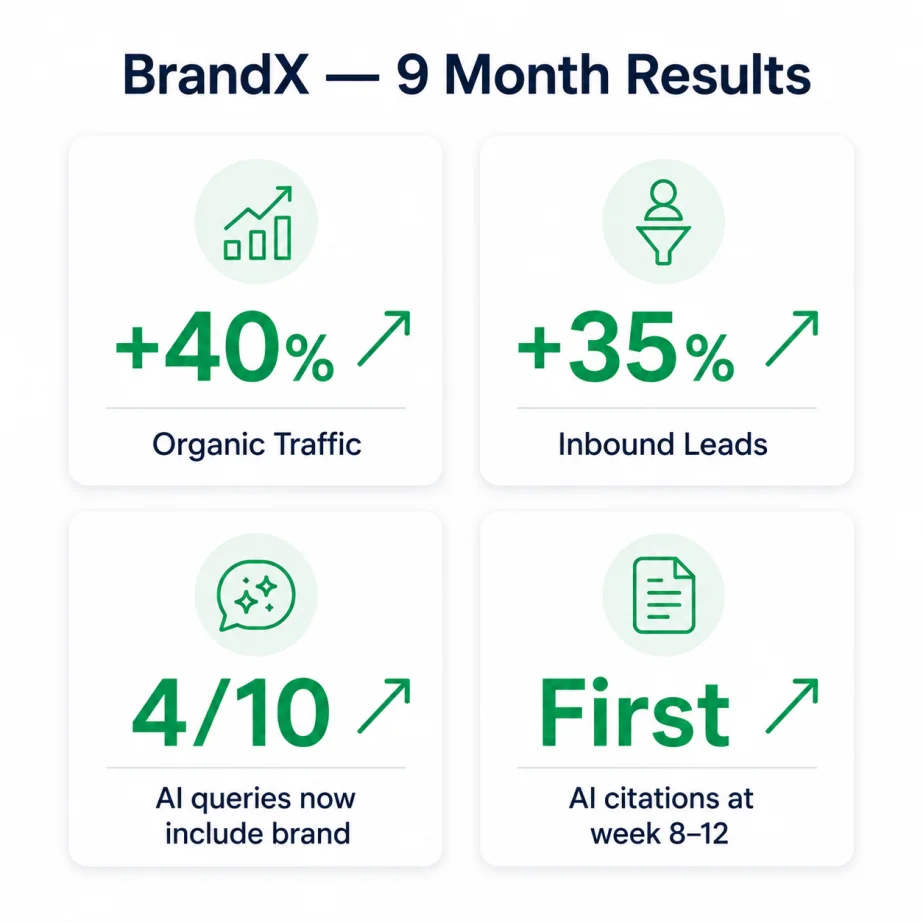
Results at 9 months: Organic traffic grew ~40%. The brand started appearing in Perplexity answers for three high-intent category queries. ChatGPT began citing their blog on protein supplementation for Indian vegetarians. Inbound leads from organic channels rose ~35%. AI visibility went from zero mentions to appearing in 4 out of 10 category-level queries.
The 8–12 week mark was when first AI citations appeared. Meaningful traffic and lead lift came at month 5–6.
5 Mistakes Indian Brands Are Making Right Now
Most brands are making at least three of these. Fix them before building anything new.
Mistake 1: Treating Google as the only search surface
Fix: Survey your customers on where they actually research before buying. Most cross-reference 3–4 platforms. Map your presence — or absence — on each.
Mistake 2: Burying answers deep in long-form content
Fix: Rewrite every important page with answer-first structure. Put the direct answer in the first 100 words. AI tools pull from opening paragraphs most often.
Mistake 3: Inconsistent brand names across platforms
Fix: Run an entity audit today. Search your brand name across Google, Amazon, Flipkart, LinkedIn, and Crunchbase. Make every name, description, and category tag identical.
Mistake 4: Ignoring community forums entirely
Fix: Assign one person 30 minutes per day on Reddit and Quora in your category. No selling. Just contributing. It takes 60–90 days to build credibility that pays off.
Mistake 5: Not tracking AI visibility at all
Fix: Start a weekly habit — ask ChatGPT and Perplexity 5–10 queries in your category. Screenshot when you appear. Log it in a Google Sheet.
What This Costs: Real Numbers for Indian Startups
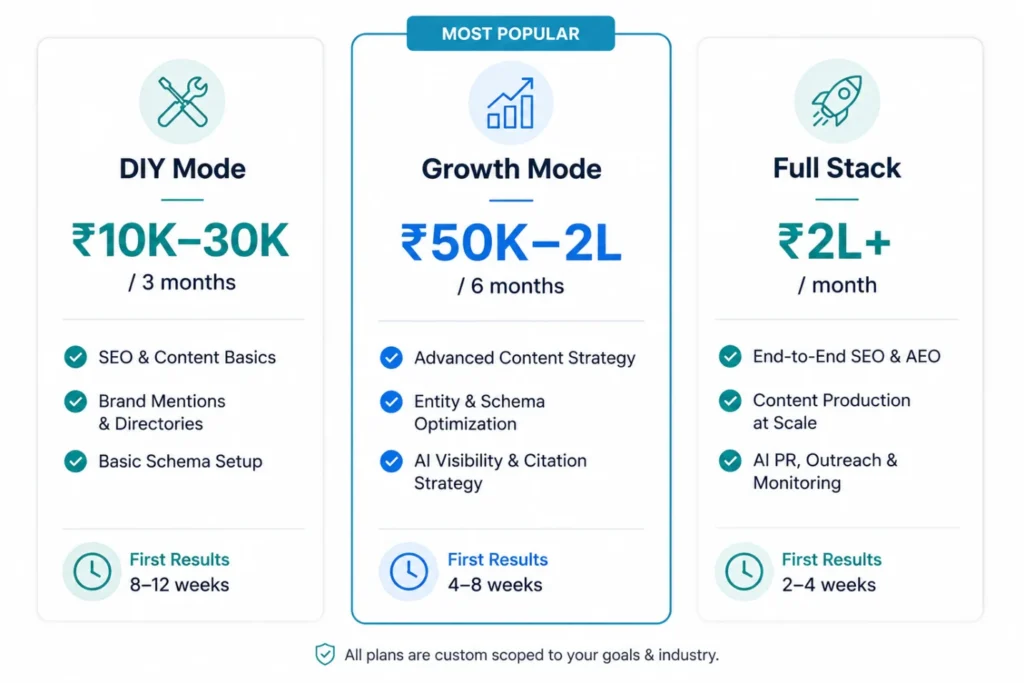
DIY Mode (₹10,000–₹30,000 / 3 months): You’d typically have one in house content person, plus Google Alerts (free) and a Semrush basic plan (~₹8,000/month). There’s also a one time schema setup (~₹5,000–₹10,000). Realistically , first AI citations show up around 8–12 weeks, and you usually see a traffic lift near 3–4 months.
Growth Mode with Agency (₹50,000–₹2,00,000 / 6 months): A focused agency handles the whole thing more or less, content strategy, schema work, Reddit/Quora seeding, and outreach for citations. You should expect stronger AI visibility by month 3–4, and then a more noticeable traffic lift by month 5–6.
Full Stack Ongoing (₹2,00,000+/month): For brands at scale — this covers ongoing content production, video optimization, community management, PR specifically for AI citations, and advanced tracking too.
Tools to track AI visibility (most free or cheap):
- Semrush AI Search Visibility Checker — tracks brand mentions in AI-generated answers
- Google Alerts — free, simple, massively underused
- Mention — monitors brand across Reddit, news, and social (~₹1,500–₹3,000/month)
- Rankability AI-Visibility Tracker — built specifically for GEO and AEO performance
- Manual weekly checks — ask ChatGPT/Perplexity 5–10 category queries every Monday. Log it. The highest-signal, lowest-cost tool you have.
Looking to boost visibility on Amazon and Flipkart specifically? Explore our Marketplace SEO Services or our full Search Engine Optimization (SEO) Services for a multi-channel approach.
Ready to Build Your Search Everywhere Strategy?
If you’re a founder running a D2C brand, SaaS startup, or local business in India, your growth bottleneck is likely where your audience actually searches now — not where you’ve been optimizing.
Your customers are asking ChatGPT which brand to choose. They’re watching YouTube reviews before buying. They’re reading Reddit threads about your category. Right now, most of them aren’t finding you on any of those surfaces.
That’s fixable. But it requires starting before your competitors do.
At Brandlogg, we run a free Search Everywhere Audit — mapping exactly where your brand appears (and doesn’t) across Google, AI tools, YouTube, Reddit, and marketplaces. No pitch, no pressure. Just a clear picture of where you stand and where the opportunity is.
Book your free audit today — takes 20 minutes to brief us. We’ll do the rest.